Showing posts with label Open educational resources. Show all posts

Friday, January 31, 2014

Open Textbooks and Student Success

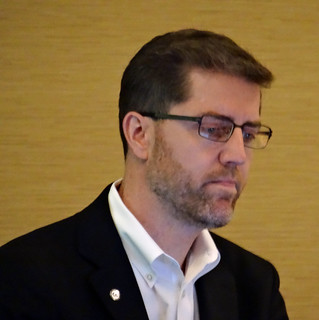
Cable Green
Cable Green (Photo: Jeffrey Beall)
The tirelessly brilliant and ubiquitous Cable Green sent out today's announcement from Creative Commons about the U.S. PIRG Education Fund report called, “Fixing the Broken Textbook Market: How Students Respond to High Textbook Costs and Demand Alternatives." This report reinforces what the research is already showing - open textbooks can be a significant contributing factor to student success. The results we saw with projects like the Kaleidoscope Project was that students were actually doing better in courses that were using openly licensed, free textbooks. There are a number of reasons for this, but one of the reasons at College of the Redwoods was that the faculty created textbooks were written for a particular student population to solve particular problems. The books actually addressed the needs of the community. You can still find articles out there about the so-called suspect quality of open education resources, but they are being written by folks who have not looked at what is out there now.  Articles like “The cost and quality of open textbooks: Perceptions of community college faculty and students” by TJ Bliss, John Hilton, David Wiley, and Kim Thanos go a long way to dispel those myths as does "A Preliminary Examination of the Cost Savings and Learning Impacts of Using Open Textbooks in Middle and High School Science Classes," by David Wiley, John Levi Hilton III, Shelley Ellington, and Tiffany Hall.

Commercial textbooks have their own myths to deal with - like whether or not they are reliable!

This is a very dynamic time to be involved in open textbooks!
Enhanced by Zemanta

Friday, November 15, 2013

Durbin, Franken Introduce Legislation to Help Make College Textbooks More Affordable

U.S. Senator Richard Durbin, of Illinois.
U.S. Senator Richard Durbin, Ill.
 The cost of new textbooks has increased 82%, three times faster than inflation, over the last decade.

[WASHINGTON, DC] – U.S. Senators Dick Durbin (D-IL) and Al Franken (D-MN) today introduced legislation designed to help students manage costs by making high quality textbooks easily accessible to students, professors and the public for free.  This bill, known as the Affordable College Textbook Act, would create a competitive grant program for institutions of higher education, working with professors and other organizations, to create and expand the use of textbooks that can be made available online and licensed under terms that grant the public the right to freely access, customize and distribute the material, also known as “open textbooks”.

“My home state of Illinois provides an example of how the bill I am introducing with Senator Franken can be successful,” said Durbin.  “Over three years ago, I worked to secure funding for the University of Illinois to complete an open textbook project.  The University, working with faculty, identified sustainability as the topic for the project and an area of study in need of such open resources. Since 2012, the textbook that was produced from this effort – Sustainability: A Comprehensive Foundation – has been in regular use at the University of Illinois campuses. The book has been used in a Massive Open Online Course that has been sampled by at least 60,000 students.  At least a dozen schools throughout the country have either contacted the University of Illinois about the text or are using it.  This bill can replicate and build on this success and help make the cost of attending college more affordable.”

“In the fight to make college more affordable and accessible for Minnesota families we can’t overlook the rising costs of textbooks,” said Franken. “I’m proud to introduce this bill with Senator Durbin because it will help provide cheaper alternatives to traditional textbooks and keep more money in students’ pockets where it belongs.”

Textbook costs are one of the most overlooked costs of going to college, but they can be substantial and can be a barrier to attaining a college education.  According to College Board, the average student budget for college books and supplies during the 2012-2013 academic year was $1,200.

“Students can’t afford to pay $250 for a single textbook. In fact, U.S. PIRG found that seven of ten current college students have skipped buying a textbook because it was too expensive. It’s clear that the current big-publisher system isn’t working for students, and needs to change,” said U.S. PIRG Higher Education Associate Ethan Senack.  “For students, the cost-saving potential of open textbooks is massive - around 80-100% compared to published textbooks. We thank Senators Durbin and Franken for championing this innovative solution to the high cost of textbooks.”

Today’s legislation expands on the 2008 Higher Education Opportunity Act which contained provisions from Durbin’s College Textbook Affordability Act that aimed to make more information available to students looking to manage college textbook costs.  Durbin introduced his bill after learning of troubling practices by the publishing industry to create new textbook editions with little new content to drive up costs and bundle additional and often unwanted materials to required texts at students’ expense.  The 2008 law required textbook publishers to disclose to faculty the cost of a textbooks to their students, required schools to publish textbook information in course catalogues when practicable, and required publishers to offer unbundled supplemental materials so students had choices.  The provisions took effect on July 1, 2010.

While a June 2013 GAO Report required by the law found that students had more information and publishers and schools were generally complying with the new disclosure requirements, it also found that the price of textbooks had continued to rise.

“Textbook prices are simply unaffordable and have become a barrier to academic success for too many students,” said Nicole Allen, Open Educational Resources Program Director for the Scholarly Publishing and Academic Resources Coalition.  “This bill would help more colleges leverage open educational resources to make higher education more affordable and accessible for all.”

“The dirty secret about textbooks is that they don't have to be so expensive given the rise of technology. Even worse, if you put textbook debt in larger context with student debt, the affordability of college is becoming less and less tenable, and, as a result, the American dream is becoming more difficult for the next generation to attain,” said Matthew Segal, co-founder of OurTime.org

The limited federal investment in the creation and expanded use of a set of high-quality, introductory level college textbooks outlined in the Affordable College Textbook Act can improve learning, access, and affordability for all college students.  Making high-quality open textbooks freely available to the general public can significantly lower college textbook costs and increase accessibility to higher education.  Open textbooks can also improve learning and teaching through course materials that are more flexible, adaptable, and accessible for professors.

Specifically, the Affordable College Textbook Act:
  • Creates a grant program to support pilot programs at colleges and universities to create and expand the use of open textbooks with priority for those programs that will achieve the highest savings for students;
  • Ensures that any open textbooks or educational materials created using program funds will be freely and easily accessible to the public;
  • Requires entities who receive funds to complete a report on the effectiveness of the program in achieving savings for students;
  • Improves existing requirements for publishers to make all textbooks and other educational materials available for sale individually rather than as a bundle; and
  • Requires the Government Accountability Office to report to Congress by 2017 with an update on the price trends of college textbooks.
The Durbin-Franken Affordable College Textbook Act is supported by the following organizations: U.S. PIRG, the Scholarly Publishing & Academic Resources Coalition, American Association of Community Colleges, National Association of College Bookstores, National Association of Graduate and Professional Students, OUR TIME, Creative Commons and the OpenCourseWare Consortium.
Enhanced by Zemanta

Thursday, November 07, 2013

Open Ed 13: OER and Solving th Textbook Crisis

Textbook Stack
Textbook Stack (Photo credit: greenasian)
"The average U.S. college student spends more than $1,000 per year on textbooks and supplies, a significant expense on top of already burdensome college costs. Textbook prices continue to soar four times faster than inflation, and many commonly-used texts cost over $200 a piece. The U.S. market is estimated at $8.8 billion, with just five publishers in control of the vast majority of sales.

Open textbooks and OER offer a compelling and common-sense solution to these challenges, and for the last six years, the Student PIRGs and other advocacy groups have worked to win support for OER through this lens.

The potential is huge: With today's rapidly changing student preferences, open textbooks could revolutionize the way textbooks are bought and sold - the full text is offered free online, low-cost hard copies can be sold in the bookstore, and a wide range of print and digital formats are available online. This virtually eliminates affordability concerns while enabling all students to have unfettered access to the text starting the first day of the course.

This session will provide a campaign update from the front lines of the textbook affordability front, focusing on how much progress OER has made as a solution. This will include the latest developments in the public debate around textbook costs, new research quantifying OER savings, analysis of how the publishers are responding, and specific recommendations for how audience members can join or further the cause."

Nicole Allen, OER Program Director, SPARC
nicole@sparc.arl.org  
@txtbks
http://sparc.arl.org/issues/oer/join

I am excited to be at this presentation because when I first got involved with open textbooks and when Nicole worked for PIRGs I would call her up and ask LOTS of questions. She is an extremely helpful person.

SPARC is promoting open access to scholarly research but they are interested open textbooks as well.

The Problem
Student loan debt tops a trillion dollars. Default rates rise for the sixth year in a row. Students often run out of financial aide before

Average student budget for books is $1200 a year. for some students, this is the difference between going to school and dropping out.

Textbook prices are up 82% - 3 x the rate of inflation. It is an 8.8 billion $ market. A broken market model - the professor chooses for the student and companies set the price.

The most popular calculus textbook from Cengage is $250. The digital version of an Economics textbook is $144 and you only get it for 189 days. The printed textbook comes with a passcode that expires - this eliminates the used book market.

Rentals can save 61%

As prices continue to rise, the cheaper alternatives are also becoming expensive.

1 out of 3 students are using pirated textbooks online.
2 in 5 share textbooks, 7 in 10 undergrads forgoe bying a textbook because of cost. 

Open Textbooks
The savings are about 80%
Studies show that use of open textbooks are correlated with higher grades and retention rates.

What Needs to Happen
Textbooks need to be improved.
More support for adoption and more awareness.

Policy
Resources to fund development
Open licensing for grants as a requirement.
FDHA Policy (2004) is a great example of a college policy.

Campus Advocacy
Students need to be engaged
Libraries - SPARC is a library membership inst.
Faculty and administrators

Student PIRGs has created a faculty awareness toolkit.

University of Mass, Amherst Libraries have saved $750,000 in two years through their work on OER.
U of Minn has created an open textbook catalog and is creating a review process.
Enhanced by Zemanta

Thursday, February 21, 2013

OER: Neuro-Cloud: a new model of textbooks

I am really excited about Neuro-Cloud. I heard about it in a tweet from Creative Commons this morning and went to take a look. This is a textbook that is being created by a community of neuroscientists who first began the project as an open journal. It is free for anyone to use because they are using the CC-by license instead of traditional copyright. It is still a work in progress: they want to have a finished textbook by July of 2013.

I have been very interested in textbooks that are created by a community of scholars rather than the traditional subject matter expert model of the traditional publishers. The math textbooks at my previous college are an example of this. I think it is particulary fitting that this is how a textbook on neuroscience is written and supported because neuroscience is a rapidly changing field. Every advance in technology gives us more ways to look at the brain and like astronomy or physics, the deeper in we look, the more we find. What is fascinating about this project is that students will be reading a text written by this current generation of neuroscientists and then will go on to do research and work that will contribute to the later editions of this book. This is a living community of scholarship as much as it is a textbook:
"The goal of the Neuro-Cloud Textbook Project is to provide a free, accurate and comprehensive introduction to neuroscience for both educators and students. This is to be accomplished through an online collaborative environment where the next generation of neuroscientists will have the opportunity to work with colleagues from all over the world. By providing students experience, connections and a chance to showcase their knowledge, all while providing a needed service to the community, the Neuro-Cloud Textbook Project creates a situation where the whole world can benefit."
There has been a lot of hand wringing about "sustainability" over open education resources and open textbooks. As soon as we move away from the education-as-a-product model and move towards education as community (I am thinking here of the Connectivist model), questions about money become less relevant.
Enhanced by Zemanta

Monday, January 28, 2013

OER: 12 Sources of Open Textbooks

Brigham Young University faculty survey seeks ...
(Photo credit: opensourceway)
With the State Department's announcement and posts on twitter about failed business models, I think this is a good time to revisit how to find actual free, openly licensed textbooks. There are many ways to find free, openly licensed textbooks on the internet. I have listed a dozen here, but if you are still not finding what you need, feel free to contact me. I really mean that. I think making education financially accessible to your students is just that important. Some of these resources over lap, but that is okay - you will find some of these sites easier to use than others. There are a lot of things happening in the world of open textbooks. A lot of the criticisms that you may have heard in the past are fading away as sites dedicated to the peer review and vetting of open textbooks become more prevalent. This is not the definitive list - if there is a site that you use or prefer, please post a comment and share.

1. Saylor Foundation
Each of the books listed below is freely available for download, online reading, and sharing, under one of various open licenses.

2. OpenStax
"OpenStax College is a nonprofit organization committed to improving student access to quality learning materials. Our free textbooks are developed and peer-reviewed by educators to ensure they are readable, accurate, and meet the scope and sequence requirements of your course."

3. MERLOT
"Putting educational innovations into practice. Find peer reviewed online teaching and learning materials. Share advice and expertise about education with expert colleagues. Be recognized for your contributions to quality education."

4. College Open Textbooks
If you run into any links to Flat World Knowledge textbooks here, be sure to go to the Saylor Foundation website to get free access to those titles. "College Open Textbooks has peer-reviewed more than 100 open textbooks for use in community college courses and identified more than 550: College Open Textbooks has already peer-reviewed several new open textbooks for use in community college courses and identified more than 250 others for consideration. Open textbooks are freely available for use without restriction and can be downloaded or printed from web sites and repositories."

5. Connexions
"Connexions is a dynamic digital educational ecosystem consisting of an educational content repository and a content management system optimized for the delivery of educational content. Connexions is one of the most popular open education sites in the world. Its more than 17,000 learning objects or modules in its repository and over 1000 collections (textbooks, journal articles, etc.) are used by over 2 million people per month."

6. Textbook Revolution
"Textbook Revolution is a student-run site dedicated to increasing the use of free educational materials by teachers and professors. We want to get these materials into classrooms. On this site you'll find links and reviews of textbooks and select educational resources. Some of the books are PDF files, others are viewable online as e-books, or some are simply web sites containing course or multimedia content."

7. Community College Consortium for Open Education Resources
"The Open Educational Resources (OER) movement encourages the creation and reuse of free, high-quality content and open source learning systems to replace expensive and proprietary systems. By promoting OER, community colleges can create sustainable academic resources for students and provide collaborative professional development opportunities for faculty."

8. Boundless Textbooks
"Boundless is pleased to offer open introductory textbooks in the following subjects. These textbooks are published under the Creative Commons Attribution-ShareAlike (CC BY-SA) license, which means anyone is welcome to quote, mashup, reuse, and republish any portion of any book, anywhere, so long as proper citation is given."

9. Wikibooks
Wikibooks is an "open-content textbooks collection that anyone can edit" with over 2,500 open-content textbooks.

10. Open Culture
A meta-collection of free textbooks.

11. Bookboon
"Online Textbooks for Free Bookboon's free online textbooks for students are focused and to the point. They are all written by highly respected professors from top universities in the world and cover topics such as economics, statistics, IT, engineering and natural science."

12. Directory of Open Access Books
"The primary aim of DOAB is to increase discoverability of Open Access books. Academic publishers are invited to provide metadata of their Open Access books to DOAB. Metadata will be harvestable in order to maximize dissemination, visibility and impact. Aggregators can integrate the records in their commercial services and libraries can integrate the directory into their online catalogues, helping scholars and students to discover the books. The directory will be open to all publishers who publish academic, peer reviewed books in Open Access and should contain as many books as possible, provided that these publications are in Open Access and meet academic standards."
Enhanced by Zemanta

Friday, November 09, 2012

A World Map of Open Educational Resources Initiatives

Open Educational Resources
Open Educational Resources (Wikipedia)
A world map of Open Educational Resources initiatives: Can the global OER community design and build it together?

 First, an International discussion 12 – 30 November 2012 *

Next, local discussions – organized locally An international online conversation –

The objective is to explore whether the OER community worldwide could work together to design and build an OER world map – starting with institutional initiatives and basic information.

 A definition – Open Educational Resources are teaching, learning, and research resources that reside in the public domain or have been released under an intellectual property license that permits their free use and re-purposing by others. They may be full courses or course materials, modules, textbooks, streaming videos, tests, software, and any other tools, materials, or techniques used to support access to knowledge (William and Flora Hewlett Foundation).

 Now a decade of development – a global movement with more and more OER initiatives, in more and more countries. The vision of increasing access to the world’s knowledge through making resources open and accessible is beginning to be realized.

 But we still have a problem – we do not have a comprehensive overview of OER projects in the world – how do I know what is going on in my own country? And how do I find contacts in other countries, or contacts working in my own language? An OER world map – A map would give us the big picture of the global OER movement. It would help us communicate the story of OER. Furthermore, it could be enhanced with information such as OER initiatives by language, and with links to other maps. And it would help us connect.

 Community collaboration – Working together the OER community could design and build the map, and then regularly update it. With time, energy and collaboration, the map could become a door to the OER world, helping us communicate with stakeholders and connect with each other.

 Outline of the international discussion
 Week 1: What could an OER world map look like? - 12-16 November
  • Why map the OER landscape 
  • Essential information and visual presentation 
Week 2: Could a world map be built collaboratively? - 19-23 November
  • Organizational approach for collaboration 
  • Ensuring the quality of the information 
 Week 3: Reflection and next steps - 26-30 November
  • Design of an “OER World Map”
  • Organization Resources available/needed 
  • Next steps 
Join the International Conversation 
Send an email to oer-community-request@athabascau.ca and type subscribe in the subject line.

Share this announcement with your colleagues and networks.

Plan a parallel or follow up discussion in your own language and network and give your feedback for the final report of all the discussions.

 For more information or questions, contact Susan D’Antoni at oermapping@gmail.com
Enhanced by Zemanta

Wednesday, October 31, 2012

Open Academics at the University of Minnesota

The Richardsonian Romanesque Pillsbury Hall (1...
The Richardsonian Romanesque Pillsbury Hall (1889) is one of the oldest buildings on the University of Minnesota Minneapolis campus. (Photo credit: Wikipedia)
I was really excited this morning to see Stacy Olson's tweet () about the University of Minnesota's Open Textbook Catalog. This is more than a collection of links: their Open Academics site is easy to navigate and encourages faculty to post their reviews of textbooks. This is a great model for institutional support of open textbooks. In the words of the site: "If you are a faculty member from any institution, you can support this project and help your peers evaluate the textbooks in this catalog by writing a review of an open textbook in your field. Only experts like you can determine quality." This has been a perception issue with open education resources in the past - uneven quality. I want to encourage everyone to visit this site and contribute a review. These efforts should be supported because faculty should be vetting textbooks, not corporate education publishers. In a posting I made here earlier (OER: The Myth of Commercial Textbook Reliabilty), I wrote that "Instructors and academic departments should partner to author, revise, adapt, and vet course materials. We should be partnering with other institutions to support these efforts - a textbook should include a network of subject matter experts, expert practitioners in the field, and advanced students." Efforts like these encourage the formation of communities of scholarship around open textbooks. Commercial publishers do not work this way - it all has to be proprietary and in-house to justify the high costs of their "product." Communities of teaching and learning can do better. The University of Minnesota has taken a big step in that direction.
Enhanced by Zemanta

Wednesday, September 19, 2012

OER Adopter Communities: the Sustainability Factor in Open Education

Open Textbooks from the Open Course Library
Open Textbooks from the Open Course Library (Photo credit: caswell_tom)
Una Daly has invited you to the event 'September 25 OER Adopter Communities: the Sustainability Factor in Open Education' on College Open Textbooks Community!

Check out the entire Fall 2012 CCCOER Webinar Lineup

Time: September 25, 2012 from 10am to 11am
Location: online Pacific TIme zone
Organized By: Una Daly Event

Description: Please join CCCOER September 25, 1:00 pm Eastern to hear how three successful OER adoption projects built sustainable communities of faculty and staff to customize open textbooks and open educational resources to lower costs and better meet the needs of students at their colleges. Presenters from the Kaleidoscope Project at College of the Redwoods, Cuyahoga Community College, and Scottsdale Community College will talk about their challenges and achievements in finding, evaluating, and adapting high-quality OER to replace high cost publisher textbooks.

 • Danielle Budzick, Interim Director of Faculty Development, Adjunct Business Instructor & Linda Glassburn, Assistant Professor Business & IT at Cuyahoga Community College in Ohio. Danielle and Linda worked with the other Business Communications instructors at Cuyahoga college to adopt an open textbook from Flat World Knowledge and revise it to meet college learning outcomes.

A Wikiversity Logo for Open Educational Resour...
(Photo credit: Wikipedia)
 • Geoff Cain, Director of Distance Education at College of the Redwoods in California and an instructional designer on the Kaleidoscope Next Generation Learning Grant. Geoff worked with Biology Instructor Wendy Riggs to find and adapt open educational resources to improve student learning outcomes and replace publisher textbooks.

 • Dr Donna Gaudet, Developmental Math Professor at Scottsdale Community College in Arizona. Donna and her colleagues in the Math Department have been finding and adapting open textbooks and open educational resources for over two year to improve student understanding of developmental math and replace their former expensive curriculum.

 PARTICIPANT DETAILS
No pre-registration necessary. On the day of the webinar, please click here to login and then press the Connect button. You may use a headset or dial-in to speak live: (888) 886-3951
Enter your passcode: 918603

 PARTICIPANT CONFERENCE FEATURE
*0 – Contact the operator for audio assistance
*6 – Mute/unmute your individual line

PRIOR TO YOUR FIRST CCC CONFER MEETING, it is recommended that you:
Test Your Computer Readiness

FOR ASSISTANCE: CCC Confer Client Services – Monday – Friday between 8:00 am – 4:00 pm See more details and RSVP on College Open Textbooks Community:
Enhanced by Zemanta

Monday, March 26, 2012

OER Policy Registry: Request for Help

Image representing Creative Commons as depicte...Image via CrunchBaseCable Green just lit the Bat Signal!

Greetings Open Colleagues,

The open community shares a need for more information to help us with our work. We know, for example, that there are many policies supporting open education at institutions and governments throughout the world. Many of us know of some of these policies, but it would be extremely helpful if we had a single database of open education policies that the entire community could access and update.

To meet this goal, Creative Commons has received a small grant to create an “OER Policy Registry.” The Open Educational Resources (OER) Policy Registry will be a place for policymakers and open advocates to easily share and update OER legislation, OER institutional policies and supporting OER policy resources. We have begun to enter OER policies into the registry, but we need your help to make it a truly useful global resource.

The open movement is reaching a stage where we’ve had some real, concrete OER policy victories and there is the potential to achieve many more. Sharing our collective knowledge of existing OER policies, in the same way we believe in sharing educational resources, will help advocates and policymakers worldwide be more successful.

Please join the effort:
(1) Contribute any OER policies you know about via this Google form.
  • We are collecting both legislative AND institutional (non-legislative) OER policies from around the world. Your form submissions will be added to the draft list of OER policies.
(2) Review the draft list of OER policies. (Google doc)
(3) Forward this message to your colleagues, lists, blogs, and other channels, to ensure that we get as much input as possible. As the OER movement is global, it is critical that we capture OER policies from around the world.

Anyone can add OER policies to the Google form through the next month. Beginning May 1, the OER Policy Registry will move to the Creative Commons wiki. At that point, anyone will be able to edit and update the OER Policy Registry on the wiki, and all contributions will be licensed under CC BY.

We’re starting with a Google form because (a) it’s easy and (b) wikis require you to create an account before editing, and that may be a barrier to participation.

CC is in contact with other projects that collect similar information, including UNESCO, CoL, the Florida Distance Learning Consortium, EU OCW and a project in New Zealand. We will add OER policy data they gather as it becomes available. If anyone knows of other efforts to gather OER policies, please send them to Anna Daniel (anna@creativecommons.org) and we will reach out to them too.

If you have any suggestions or feedback on the content and/or framework, please let us know.

Warmest regards and thank you!

Cable
Enhanced by Zemanta

Wednesday, February 22, 2012

Open Education Week from March 5-10, 2012

A Wikiversity Logo for Open Educational Resour...Image via WikipediaEfforts to Expand Access to Education and Knowledge to be Featured in Global Events

CAMBRIDGE, Mass., – (February 21, 2012) –The OpenCourseWare Consortium announces today the first annual Open Education Week from March 5-10, 2012. Open Education Week is a global event that seeks to raise awareness about the benefits of free and open sharing in education, especially Open Educational Resources (OER). OER are high-quality, free and open educational materials that offer opportunities for people anywhere in the world to share, use and reuse.

“The vision of the open education movement is to create a world in which the desire to learn is fully met by the opportunity to do so, where everyone, everywhere, is able to access affordable, educationally and culturally appropriate opportunities to gain whatever knowledge or training they desire. The movement encompasses producing, sharing, using and modifying content, as well as innovative models of educational delivery,” said Mary Lou Forward, executive director of the OpenCourseWare Consortium. “Open Education Week will showcase projects, resources, people and ideas so that people around the world can see the breadth of what has been accomplished already, and participate in discussions about the future of the movement.”

Open Education Week is being coordinated by the OpenCourseWare Consortium. The event will take place online and in different locations around the world, with opportunities to participate in webinars, discussions and live events. Projects and events will be featured from institutions and organizations from around the world, including: University of Cape Town, University of Michigan, Universidad Politécnica de Madrid, University of California, Irvine, Delft University of Technology, and Creative Commons.

Participation is free and open to all. Visit www.openeducationweek.org for more information.
Enhanced by Zemanta

Monday, January 30, 2012

Apple Innovates Away Textbook Access and Affordabilty

I wanted to write a few notes here about many of the questions and comments I have read on Twitter and elsewhere about the iPad and textbook authoring. Two things that Apple does well is marketing and innovation. Sometimes though, the two don't speak well together. Apple is "reinventing" the textbook only for those who haven't been watching the textbook get reinvented over the last ten years. The open textbook and OER movements have been reinventing textbooks and revolutionizing education for while now. What Apple has figured out is how to monetize and brand that "revolution" into a free app on an expensive non-ADA compliant platform. English: The logo for Apple Computer, now Appl...Image via Wikipedia

I have a Mac at home and an iPod, why aren't I delirious over the "new" technology? Because for what I do, for the problems I need to solve, Apple is no solution. What Apple has done is to figure out a way for instructors to quickly author textbooks on their proprietary platform. For instance, faculty can now take an open textbook, load it on to an iPad and upload it to the app store where it is now inaccessible to those with smaller budgets, older computers or even an e-book reader. How is this an improvement? All I see is an expensive tool designed to lock out poorer students and colleges.

Where would we get the money to provide iPads for students? Do we make it a requirement that students have to have an iPad to take someone's class? The colleges that are most excited about this are those with money. I think you will find the community colleges less enthusiastic.

Why is Apple doing this? According to Publisher's Weekly: "Sales of mass market paperback plunged in September, falling 54.3% at reporting houses. Trade paperback did much better with sales flat at reporting houses, while hardcover sales fell 18.1%." PW goes on to say that "For the first nine months of 2011, e-book sales were up 137.9% at reporting publishers, to $727.7 million." The e-book market is ripe for "innovation." Apple is not interested in opening access to education; they are not interested in innovating in education for the sake of education. Their eye is on the bottom line as it has always been.

Patrick Martin really summed this up nicely: “at the bare minimum, the technology that replaces textbooks must work across multiple platforms and be capable of running on the cheapest hardware. Anything short of that will just be another thing that only more prosperous parents can purchase in hopes of giving their children a leg up. There’s nothing wrong with that, but it’s not a revolution.”

Enhanced by Zemanta

Monday, January 23, 2012

Open Education Week Coming in March

This from Cable Green at Creative Commons: "Join your colleagues around the world to increase understanding about open education! Open Education Week will take place from 5-10 March 2012 online and in locally hosted events around the world. Image representing Creative Commons as depicte...Image via CrunchBaseThe objective is to raise awareness of the open education movement and open educational resources. There are several ways you and your organization can be involved..." He then goes on to list several ways - provide a pre-recorded presentation of your work in OER, host a webinar, etc. There is a form at the bottom of the announcement.This is an important organization to support: they have literally redefined copyright in favor of both the consumers and producers in an age where the lines between the two are dissolving quickly. As they put it at Creative Commons: "The idea of universal access to research, education, and culture is made possible by the Internet, but our legal and social systems don’t always allow that idea to be realized. Copyright was created long before the emergence of the Internet, and can make it hard to legally perform actions we take for granted on the network: copy, paste, edit source, and post to the Web. The default setting of copyright law requires all of these actions to have explicit permission, granted in advance, whether you’re an artist, teacher, scientist, librarian, policymaker, or just a regular user. To achieve the vision of universal access, someone needed to provide a free, public, and standardized infrastructure that creates a balance between the reality of the Internet and the reality of copyright laws. That someone is Creative Commons."

Enhanced by Zemanta

Friday, December 16, 2011

Help Shape Creative Commons 4.0

Creative CommonsImage by jorgeandresem via FlickrThis just in from the ubiquitous Cable Green:

Creative Commons has officially opened the public discussion process for version 4.0 of the CC license suite. Please see the announcement below, and join the discussion by subscribing to the CC license discussion list (link in blog post, below).

As we all know, the core part of any OER definition is the educational resource is either openly licensed or is in the public domain... so anyone can: reuse, revise, remix and redistribute. This is your chance to affect the licenses we all use to share OER.

One of the many reasons CC is considering versioning the licenses at this time is to address how can we improve the attribution requirements to ease citation in open educational resources (OER).
What would you like to see changed?

Starting now through February we are holding a requirements gathering period, an important (if not the most important) time to contribute ideas for improving the license suite. We hope you'll join the discussion and share your ideas for how we can improve the licenses for use with public sector information and data. And please do help us spread the word.

http://creativecommons.org/weblog/entry/30676
Enhanced by Zemanta

Monday, December 12, 2011

Open Content Licensing for Educators Workshop

Image representing Creative Commons as depicte...Image via CrunchBaseThis in from Cable Green: Creative Commons, the OER Foundation and Ako Aotearoa announce an international professional development opportunity for all educators.

What: Open content licensing for educators workshop (#OCL4Ed)
Where: Online
When: 23 -27 January 2012
Cost: Free
Registration: Open (register today)
Facilitators:
  • Cable Green, Director Global Learning, Creative Commons
  • Jane Hornibrook , Public Lead, Creative Commons Aotearoa New Zealand
  • Wayne Mackintosh, Director, OER Foundation.
Open content licensing for educators (#OCL4Ed) is a free online workshop designed for educators who want to learn more about open education resources, copyright, and creative commons licenses.
Wikieducator logo.Image via WikipediaThe course materials were developed as a collaborative project by volunteers from the OER Foundation, WikiEducator, the OpenCourseWare Consortium and Creative Commons with funding support from UNESCO. The course will provide prerequisite knowledge required by educators to legally remix open education materials and help institutions to take informed decisions about open content licenses.

Visit: http://wikieducator.org/Open_content_licensing_for_educators/About

Please spread the word through your networks. Give the gift of knowledge and invite a friend to join you.
Download and share this poster with your colleagues.

We look forward to meeting you during the workshop and extend our thanks to Ako Aotearoa, New Zealand's National Centre for Tertiary Teaching Excellence for sponsoring this professional development opportunity.
Enhanced by Zemanta

Friday, October 28, 2011

Jim Groom: The Wild Man of OER Made My Year

I was at the Open Education 2011 conference this week and David Wiley had the good sense to invite Jim Groom in to rattle cages and shake the chains. I have been reading his stuff for sometime. You can follow him on twitter here and his blog is always worth reading, but it is really a whole other experience to meet him in person. As a distance education director, I almost never say that. He is the favorite exuberant uncle who occasionally breaks the furniture. His mind is clear but his soul is mad. and here he is at his Dionysian best:


We need folks like Jim to remind us that there are political consequences to our choices and that passion matters.
Enhanced by Zemanta

Wednesday, October 26, 2011

Assessment and Accreditation of an OER Learner

A Wikiversity Logo for Open Educational Resour...Image via WikipediaSpeakers: Rory McGreal, Wayne Macintosh
Learners accessing OER can acquire knowledge formally or informally. This project reports on assessment and accreditation policies worldwide.

A major function of colleges and universities is to validate and credentialise learning by conferring qualifications and degrees. They are well equipped and experienced in the process of assessing the quality of learning for formal academic or professional credit. However, digital media are transforming the ways individuals create, share and learn both formally and informally from content and applications available on the web. There is considerable ambiguity regarding the validity of this type of learning or self-study online and the use of individualized learning paths. The problem is that learners who access OER on the Web and do acquire knowledge and skills either formally or informally, alone or in groups, cannot readily have their learning assessed and subsequently receive appropriate academic recognition for their efforts. So, there is a need for ongoing research in order to understand the different ways that institutions are addressing the needs of this growing learner population.

This paper will report on a Canadian Social Sciences and Humanities Research project. The project is original in that it will research existing and nascent international protocols and practices leading to formal academic credit for non-traditional learners. This provides a framework to evaluate the transferability and applicability of these means for assessing OER learning on the web leading to formal credentials. Existing organisational and policy barriers will be identified and categorized. The project proposes a conceptual framework to overcome these barriers for widening access to post-secondary education through digital learning in ways, which are more accessible cost-effective and responsive to the diverse, changing needs of the knowledge economy and society.

This research is significant because the core mission of any modern university is to contribute to society. Many universities incorporate the mission of community service, as publicly funded institutions, to serve the wider interests of society by sharing expertise and scholarship. An understanding of how different institutions are approaching the recognition of non-formal and informal digital learning can provide change agents with new knowledge on how to expand their community service and learning missions by creating flexible pathways to credentialise learning for non-traditional students.

Recent transformational advances in digital media, the web and mobile devices have changed the learning landscape, ensuring that this research project is different. The exponential increase in accessibility to quality educational as OER provides unprecedented opportunities for learning. Thousands of course modules are presently available online, as OER from respected institutions, along with millions of websites that can be used to support a wide variety of learning objectives. This exponential growth has opened up opportunities for learners leading to potential obligations from our institutions.

The UNESCO/COL Chair has partners on all continents. This project will contribute to the advancement of knowledge of the assessment of learning experience for non-traditional learners. The outputs of this research could potentially have wide social impact in expanding access to learning opportunities for those students currently under-served by the formal sector while enhancing the efficiency of taxpayer funded institutions by refining existing mechanisms for assessment and accreditation or non-traditional learners.

Notes:
Their work in OERs was driven by digital rights management issues, digital licenses, and the idea that a license is a privilege not ownership. These are not conditions that encourage education.

Going to open education is not a choice - we must get away from proprietary materials.

Research objectives
Map existing projects on assessment/accreditation

They are building an open education resource university - OERU
This is to accredit students who are using open ed resources. Learning is free but you pay for the accreditation. To guarantee the credibility the assessment process must be strictly equivalent to that for mainstream students.

Participating institutions, they must have credible local accreditation. They are working with agencies to ensure quality assessment standards.

Learners access courses based solely on OER. Open students supported via "Academic Volunteers" and possible student mentors. Open assessment from participating institutions. Participating inst. grant credit and degrees.

They want to accredit all forms of learning, informal, formal, non-formal, and previous learning - also will include transfer credit, challenge for credit, and portfolio learning.

Research Questions?
Is a MOOC formal learning?
How does a "badge" system fit in?
How do we assess prior learning?

Breaking the "Iron Triangle" you can increase quality and lower cost.

University of London has been doing this for years.

"The Tragedy of the Commons" - the commons still exists in Britain and Canada. They really didn't take away the commons - private property is what is robbing people.

OER Red Herrings:
Quality issues
No credible credentials
Too rigid/flexible

Enhanced by Zemanta

Openness and Learning Analytics

Human Graphing - 20Image by nep via FlickrSpeakers: John Rinderle Norman Bier
Revise/Remix can build a 1000 points of OER light. Can these lights converge to fire authentic learning analytics & share-alike data models?

Conventional wisdom in the OER community maintains that one of the more important features of the open education approach is the malleability and customizability of materials, allowing freely available component resources to be remixed, adapted and modified to suit specific institutional directives, student needs or faculty interests. These features are important enough that the ability to revise and remix content is a core part of the commonly accepted 4R framework that defines open content. While the ability to tailor OER to meet changing or specific needs is one compelling part of the open model, the infinity variety that this encourages creates serious obstacles for another expected benefit of openness: using learning analytics to drive adaptive teaching and learning, support iterative improvement, and demonstrate effectiveness.

The ability to deliver meaningful learning analytics has been one promise of the open education approach. A use-driven design process for OER depends on the resources being used by a large number of students with varied background knowledge, relevant skills and future goals—a student population that open and well-used resources should be able to provide. Such a process can use such interaction data to iteratively improve courses in a meaningful and empirical way. Beyond improvement analytics, this same data can be used mid-stream to improve the effectiveness of learners and instructors.

Despite this promise, the OER community has not been able to create or take advantage of widespread, generally applicable learning analytics tools. While some organizations have had success in developing analytics platforms and approaches, such successes have tended to focus on specific resources, often developed with data collection in mind and not always falling at the “most open” end of the open content continuum. One barrier to more widespread analytic tools has been the variety of OER afforded by remixing and revising.

This presentation will explore the benefits and trade-offs to be made between adaptability and analytics. In the course of this exploration, we will argue that the benefits to be had from an approach that places a higher priority on analytics may outweigh those to be gained from endless variety in the OER space. Similarly, we will discuss some approaches to better harness open education’s promised ability to drive learning analytics, with greater and lesser compromises to the adaptability of OER. We will propose open communities of use and evaluation coalesced around individual OERs using learning analytics to improve the resource through coordinated revision and remix. Open education has embraced share alike licenses for materials. The next logical step is the open exchange of learning data and evidence of effectiveness, to “share alike and share data”. We will also suggest approaches to integrating disparate analytics-enabled OER into common platforms and the development of OER to published standards for learning analytic data.

Notes:
Open Learning Initiative:
Produce and improve scientifically-based courses and course materials which enact instruction and support instructors

Outcomes:
Shared understanding of challenges, tensions, and possibilities in learning analytics
Describe community-based analytics plans

Driving feedback loops. We have a huge opportunity to use assessment data around OERs. There are enormous amounts of data available.  "Infinite points of light" around all the OER repositories and initiatives.

Infinite proliferation

The 4 Rs

  1. Reuse
  2. Redistribute
  3. Revising
  4. Remix

Not recreate but to evaluate - recreate is a barrier to reuse.

What drives change in these settings?

  • Data 
  • Intuition
  • Market demand
  • Instructor preferences - change happens because an instructor gets bored with material, but with no real idea if the changes are improving the course.
Effectiveness: An OER is effective when it demonstrably supports students in meeting articulated, measurable learning outcomes in a given set of contexts. 

They are also looking at new forms of assessment for gathering data.

Rory McGreal asked whether or not there was a clearer way to talk about what is demonstrable. There are a lot of variables in the initial statement.

Why have we not been doing this?
  • It's hard
  • Costly
  • Individual faculty need support
  • It can be threatening to educators
  • Disparate systems for collecting data

What do we mean by "learning analytics"?
Proxies vs. authentic assessment and evaluation

Analytics Definition
Data collection > reporting > Decision making > Intervention > Action
Collecting data is not enough. We also need to make sense of it in ways that are actionable.

Types of analytics
Education/classroom management
Learning outcomes

We need common, agreed upon standards, a core collection, and a space for exploration.

Problems include privacy and technical issues.

Tools that already exist:
DataShop, Evidence Hub, Learning registry, and communities of evidence

Community College Open Learning Initiative

And build new things:
We need better mechanisms to share data.
We need a community-based approach.

Learning Intelligence Systems
What would be giving up? This approach forces us to allow our minds to be charged by evidence.

Next Steps?
Innovate
Standardize
Scale

  • Commitment to assessment and evaluation
  • Community definition of analytics enabled OER
  • Common approach to data
  • Shared and private analytics platforms
Enhanced by Zemanta