Showing posts with label Open textbooks. Show all posts

Thursday, July 17, 2014

Death of the Book Redux

Ludwig Wittgenstein
Wittgenstein (from Wikipedia) 
I don't know if this is related to climate change or the polar vortex, but the yearly declaration that the book is dead or dying is early this year. Naomi S. Baron, in her article "How E-Reading Threatens the Humanities" is the latest. Never mind the fact that with every new change in technology, there is resistance to the change. Socrates was suspicious of writing itself because it took away from relying on memory. Writers like Sven Birkerts have been writing wistful epitaphs on books and culture for years, if you are not familiar with him, his book "The Gutenberg Elegies: The Fate of Reading in the Electronic Age" might be hard to find now in paperback but it is available in a Kindle edition.  The article is filled with anecdotal evidence from experiences with her students and she asks:

Are students even reading Milton or Thucydides or Wittgenstein these days? More fundamentally, are they studying the humanities, which are based on long-form reading?

As a former English teacher, I would say that is not their job but ours as teachers. It is our job to show them why Milton, Thucydides or Wittgenstein are relevant. The humanities have always been in crisis because most students expect to get training in college that will allow them to get work afterwords. It is our job as instructors to show them that despite that goal, everything they learn in humanities courses will only help them later.

When I first entered college in the 80s, I read about the death of the book, the death of the humanities, and read articles about the importance of a liberal arts education. This is probably just the nature of journals like the Chronicle of Higher Ed, but you rarely see articles like this from state or community colleges. They always seem to come from the hallowed halls of the Ivy League where instructors can afford the luxury of sitting in big libraries reading old leather bound books. What these instructors are really afraid of is the change in the technology. The technology makes paying hundreds of dollars for a text irrelevant and wasteful. There are too many new ways to deeply engage in an online text. I would recommend that anyone who is interested in this read Innovating Pedagogy 2012, the first article is called "New pedagogy for e-books." There are a number of tools that allow for commenting, highlighting, and discussing texts. I would especially include here:

  • NB from the Haystack Group at MIT's CSAIL. This site allows instructors to upload PDFs and then students can bookmark, highlight, add comments, and discuss the text with the class.
  • Diigo allows students to bookmark, highlight and comment on online texts and then share those bookmarks.
  • Bounce - Students or teachers can select regions of a webpage, annotate, and share the URL of the annotated page with others, who may also comment.
  • Google Docs - Any text can be uploaded to Google Docs and shared with a class that can highlight and comment on that text.
  • And just about any wiki like wikispaces.com are good collaborative spaces to share and comment on texts. 
There is something exciting about holding a device in my hands that is connected to the largest library in the world. I can thoughtfully read on an iPad because I can annotate a text, bookmark, connect with others who are reading the text and if the author is alive, I can even send an email.

I see both sides of the argument - we do lose something whenever new technology is introduced. But sometimes we gain things as well. Every shift in communication technology has led to some kind of disruption, but also a benefit. We should learn from that history: moveable type got rid of scribes but eventually lowered the cost of books. One of the many ironies about all of this is that I know more people reading the classics right now because they are free downloads via Kindle, Google Books, Gutenberg, and the University of Pennsylvania's Online Books page.

We have a Biology teacher here who used an online, open textbook (openly licensed via Creative Commons) for his online and face-to-face Biology courses. Our survey tells us that these students felt that there was no difference between their experiences with the etext than with a commercial hardcopy except commercial text was too expensive!

It is up to instructors to work out how best to use this technology. There is a right way and a wrong way. Instructors should be asking questions about how best to leverage the technology into new opportunities for teaching and learning. There are a lot of tools here to harness towards the end of making the humanities engaging. Where Baron sees distractions, I see opportunities for engagement and deep learning. What Baron is really saying is that the old methods of teaching do not work in the connected age; I am not sure why that is news.

Friday, January 31, 2014

Open Textbooks and Student Success

Cable Green
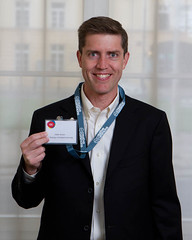
Cable Green (Photo: Jeffrey Beall)
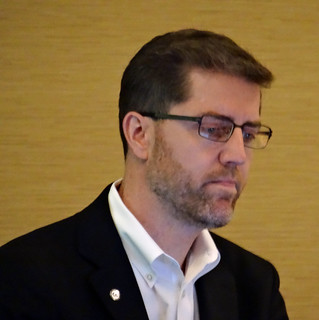
The tirelessly brilliant and ubiquitous Cable Green sent out today's announcement from Creative Commons about the U.S. PIRG Education Fund report called, “Fixing the Broken Textbook Market: How Students Respond to High Textbook Costs and Demand Alternatives." This report reinforces what the research is already showing - open textbooks can be a significant contributing factor to student success. The results we saw with projects like the Kaleidoscope Project was that students were actually doing better in courses that were using openly licensed, free textbooks. There are a number of reasons for this, but one of the reasons at College of the Redwoods was that the faculty created textbooks were written for a particular student population to solve particular problems. The books actually addressed the needs of the community. You can still find articles out there about the so-called suspect quality of open education resources, but they are being written by folks who have not looked at what is out there now.  Articles like “The cost and quality of open textbooks: Perceptions of community college faculty and students” by TJ Bliss, John Hilton, David Wiley, and Kim Thanos go a long way to dispel those myths as does "A Preliminary Examination of the Cost Savings and Learning Impacts of Using Open Textbooks in Middle and High School Science Classes," by David Wiley, John Levi Hilton III, Shelley Ellington, and Tiffany Hall.

Commercial textbooks have their own myths to deal with - like whether or not they are reliable!

This is a very dynamic time to be involved in open textbooks!
Enhanced by Zemanta

Friday, November 15, 2013

Durbin, Franken Introduce Legislation to Help Make College Textbooks More Affordable

U.S. Senator Richard Durbin, of Illinois.
U.S. Senator Richard Durbin, Ill.
 The cost of new textbooks has increased 82%, three times faster than inflation, over the last decade.

[WASHINGTON, DC] – U.S. Senators Dick Durbin (D-IL) and Al Franken (D-MN) today introduced legislation designed to help students manage costs by making high quality textbooks easily accessible to students, professors and the public for free.  This bill, known as the Affordable College Textbook Act, would create a competitive grant program for institutions of higher education, working with professors and other organizations, to create and expand the use of textbooks that can be made available online and licensed under terms that grant the public the right to freely access, customize and distribute the material, also known as “open textbooks”.

“My home state of Illinois provides an example of how the bill I am introducing with Senator Franken can be successful,” said Durbin.  “Over three years ago, I worked to secure funding for the University of Illinois to complete an open textbook project.  The University, working with faculty, identified sustainability as the topic for the project and an area of study in need of such open resources. Since 2012, the textbook that was produced from this effort – Sustainability: A Comprehensive Foundation – has been in regular use at the University of Illinois campuses. The book has been used in a Massive Open Online Course that has been sampled by at least 60,000 students.  At least a dozen schools throughout the country have either contacted the University of Illinois about the text or are using it.  This bill can replicate and build on this success and help make the cost of attending college more affordable.”

“In the fight to make college more affordable and accessible for Minnesota families we can’t overlook the rising costs of textbooks,” said Franken. “I’m proud to introduce this bill with Senator Durbin because it will help provide cheaper alternatives to traditional textbooks and keep more money in students’ pockets where it belongs.”

Textbook costs are one of the most overlooked costs of going to college, but they can be substantial and can be a barrier to attaining a college education.  According to College Board, the average student budget for college books and supplies during the 2012-2013 academic year was $1,200.

“Students can’t afford to pay $250 for a single textbook. In fact, U.S. PIRG found that seven of ten current college students have skipped buying a textbook because it was too expensive. It’s clear that the current big-publisher system isn’t working for students, and needs to change,” said U.S. PIRG Higher Education Associate Ethan Senack.  “For students, the cost-saving potential of open textbooks is massive - around 80-100% compared to published textbooks. We thank Senators Durbin and Franken for championing this innovative solution to the high cost of textbooks.”

Today’s legislation expands on the 2008 Higher Education Opportunity Act which contained provisions from Durbin’s College Textbook Affordability Act that aimed to make more information available to students looking to manage college textbook costs.  Durbin introduced his bill after learning of troubling practices by the publishing industry to create new textbook editions with little new content to drive up costs and bundle additional and often unwanted materials to required texts at students’ expense.  The 2008 law required textbook publishers to disclose to faculty the cost of a textbooks to their students, required schools to publish textbook information in course catalogues when practicable, and required publishers to offer unbundled supplemental materials so students had choices.  The provisions took effect on July 1, 2010.

While a June 2013 GAO Report required by the law found that students had more information and publishers and schools were generally complying with the new disclosure requirements, it also found that the price of textbooks had continued to rise.

“Textbook prices are simply unaffordable and have become a barrier to academic success for too many students,” said Nicole Allen, Open Educational Resources Program Director for the Scholarly Publishing and Academic Resources Coalition.  “This bill would help more colleges leverage open educational resources to make higher education more affordable and accessible for all.”

“The dirty secret about textbooks is that they don't have to be so expensive given the rise of technology. Even worse, if you put textbook debt in larger context with student debt, the affordability of college is becoming less and less tenable, and, as a result, the American dream is becoming more difficult for the next generation to attain,” said Matthew Segal, co-founder of OurTime.org

The limited federal investment in the creation and expanded use of a set of high-quality, introductory level college textbooks outlined in the Affordable College Textbook Act can improve learning, access, and affordability for all college students.  Making high-quality open textbooks freely available to the general public can significantly lower college textbook costs and increase accessibility to higher education.  Open textbooks can also improve learning and teaching through course materials that are more flexible, adaptable, and accessible for professors.

Specifically, the Affordable College Textbook Act:
  • Creates a grant program to support pilot programs at colleges and universities to create and expand the use of open textbooks with priority for those programs that will achieve the highest savings for students;
  • Ensures that any open textbooks or educational materials created using program funds will be freely and easily accessible to the public;
  • Requires entities who receive funds to complete a report on the effectiveness of the program in achieving savings for students;
  • Improves existing requirements for publishers to make all textbooks and other educational materials available for sale individually rather than as a bundle; and
  • Requires the Government Accountability Office to report to Congress by 2017 with an update on the price trends of college textbooks.
The Durbin-Franken Affordable College Textbook Act is supported by the following organizations: U.S. PIRG, the Scholarly Publishing & Academic Resources Coalition, American Association of Community Colleges, National Association of College Bookstores, National Association of Graduate and Professional Students, OUR TIME, Creative Commons and the OpenCourseWare Consortium.
Enhanced by Zemanta

Thursday, November 07, 2013

Open Ed 13: How to Make It Work for Faculty: A study of how Washington Community and Technical Colleges Use Oer

Boyoung Chae and Connie Broughton discuss the Open Course Library for Washington State's 
 Community and Technical Colleges.

"While new open educational resources are being continuously created, little data exists on how faculty in higher education actually use and perceive open educational resources, and more importantly what types of support faculty need to help them implement the open educational resources. After developing the Open Course Library, Washington State Board for Community and Technical Colleges (SBCTC) conducted a study of how faculty at the 34 system colleges use OER. The purpose of the study is to investigate
  1. how and to what extent open educational resources are being used in the college classroom, 
  2. how faculty perceive open educational resources, 
  3. what type of support is needed to help faculty embrace the open educational resources.
In this study, a mixed-method design was used incorporating both quantitative and qualitative study methodologies. We began our study by developing an extensive survey in collaboration with two faculty unions of the community and technical colleges in the state of Washington. The survey was sent to all faculty in the system. Based on the survey results, we conducted a qualitative Delphi study. Delphi is a collective human intelligence process among experts, in this case, a focus group consisting of open educational resources experts in Washington CTC system. The group discussed what constitutes the best support system for faculty's use of open educational resources.
Based on the data collected from survey, and the consensus from the qualitative Delphi study, we created a conceptual framework that informs faculty's needs, use, expectations, and most importantly the types of support in using open educational resources.

This study will provide a roadmap for anyone who organizes the future professional development plan for open educational movement in higher education. It will remind the audiences of the most crucial aspect of building and promoting open educational resources: how to make it work for faculty."

Conducted a state-wide survey of WA community and technical college teachers, they got 730 responses and will follow up with phone interviews. 

83% of the faculty had heard of OER, and follow up questions showed that they understood what OER actually were. 67% previously searched for OER for their classes. 60% had used OER in their teaching practice.

Reasons for not adopting
  • Hard to find appropriate resources
  • No quality materials available
Conclusions from the survey was tha tth faculty needed and wanted more training and professional development activities.
Enhanced by Zemanta

Friday, April 26, 2013

Open Textbooks and the Student Debt Crisis

Loans
Loans (Photo credit: zingbot)
Daniel De Vise at The Washington Post reported that student loan debt is now at "$870 billion nationally, surpassing the nation’s outstanding balance on auto loans ($730 billion) and credit cards ($693 billion)." This is according to the report "Grading Student Loans," a source  that De Vise refers to as "a scholarly blog post published by the economists at the New York Fed." The cost of education has far outstripped the rise in the cost of living and the rising cost of healthcare. And yet, despite the fact that there are free solutions to the textbook part of the equation, educators are slow to adopt them. Open textbooks are free, openly licensed textbooks that are electronically available to students at no cost, and available to students in hard-copy for the cost of printing. They are also editable by the instructors.

There are major implementations of open education resources and textbooks, organizations dedicated to their creation, grants and initiatives for hosting and support, but there are still many educators out there who do not know about open textbooks. Many of the common questions about open education resources and open textbooks have been answered, but apparently not widely publicized. Some of the perceptions of OERs - that they are hard to find, of low quality, not peer-reviewed, etc. are out-dated views. Lets take a quick look at some of these questions

Where do I find them?
There are many sources of open textbooks. I really like the high quality collection of open textbooks that are being hosted by the Saylor Foundation.  One can also go to College Open Textbooks which is a good portal to other sites. There are many other sites that are hubs to open textbook sites.

What kind of quality?
Before we discuss quality, I would urge you to read my posting on "The Myth of Commercial Textbook Reliability." I don't think that open textbooks should be held the same scrutiny as commercial textbooks - it needs to be more. We can do better as an academic community than the commercial businesses are doing now. We do not have to wait through a two year publication cycle to make corrections or amendments to open textbooks. We don't have to produce or have the students buy "supplemental materials" because we can customize open textbooks for the needs of our particular students in our community.There are some very high quality open textbooks out there including the ones mentioned above from the Saylor Foundation.

But are they peer-reviewed?
There is a peer review process for open textbooks and it is evolving all the time. OpenStax is one provider of free, open source, peer reviewed text books, and there are organizations like College Open Textbooks are sponsoring peer review processes as well. And why can't we develop a process for this on our campuses?

The rising cost of education is fueling innovation in education such as open eduction resources, open textbooks, and to some extent, MOOCs (massive online open courses). As educators, we have a moral obligation to remove barriers to education and to open up the opportunities that education can provide to everyone. Now is not the time to balk at change; change is coming whether we want it to or not. Innovation does not have to be in the hands of the corporations. MOOCs were not invented by corporations but by innovative educators. We can decide if we want that change to come from forward thinking educators who can shape innovation, or we can wait for crushing debts to make the changes for us.

Note: I have more links to OER and open textbook resources on my OER page
Enhanced by Zemanta

Thursday, February 21, 2013

OER: Neuro-Cloud: a new model of textbooks

I am really excited about Neuro-Cloud. I heard about it in a tweet from Creative Commons this morning and went to take a look. This is a textbook that is being created by a community of neuroscientists who first began the project as an open journal. It is free for anyone to use because they are using the CC-by license instead of traditional copyright. It is still a work in progress: they want to have a finished textbook by July of 2013.

I have been very interested in textbooks that are created by a community of scholars rather than the traditional subject matter expert model of the traditional publishers. The math textbooks at my previous college are an example of this. I think it is particulary fitting that this is how a textbook on neuroscience is written and supported because neuroscience is a rapidly changing field. Every advance in technology gives us more ways to look at the brain and like astronomy or physics, the deeper in we look, the more we find. What is fascinating about this project is that students will be reading a text written by this current generation of neuroscientists and then will go on to do research and work that will contribute to the later editions of this book. This is a living community of scholarship as much as it is a textbook:
"The goal of the Neuro-Cloud Textbook Project is to provide a free, accurate and comprehensive introduction to neuroscience for both educators and students. This is to be accomplished through an online collaborative environment where the next generation of neuroscientists will have the opportunity to work with colleagues from all over the world. By providing students experience, connections and a chance to showcase their knowledge, all while providing a needed service to the community, the Neuro-Cloud Textbook Project creates a situation where the whole world can benefit."
There has been a lot of hand wringing about "sustainability" over open education resources and open textbooks. As soon as we move away from the education-as-a-product model and move towards education as community (I am thinking here of the Connectivist model), questions about money become less relevant.
Enhanced by Zemanta

Monday, December 31, 2012

OER: Saylor Foundation's New Bookshelf

Saylor Foundation
The Saylor Foundation is making spirits bright and starting the New Year right by ensuring that openly licensed, free textbooks remain freely available to students. You may have seen their press release. Their "Bookshelf" page is already up and the books that are due to go behind Flat World Knowledge paywall are now freely available. They are saving us the trouble of downloading them and hosting them ourselves.

"Each of the books listed below is freely available for download, online reading, and sharing, under a Creative Commons BY-NC-SA 3.0 license. Please share this link (and the blog post) with your networks to help spread the word!

Like many of you, we have come to rely on the free-to-read versions of the excellent texts at Flat World Knowledge. We’ve woven these books tightly into many of our free online courses, all of which rely on freely-accessible (and preferably openly-licensed) materials. When Flat World Knowledge announced recently that its previously openly-licensed books would not be available for free after January 1st, 2013, we decided to preserve the whole catalog, which we now happily share with you.

We are grateful to Flat World Knowledge for developing such an excellent catalog, and while the versions on the Flat World Knowledge website will no longer be free, the publisher continues to provide its texts at prices significantly lower than standard textbooks and with much added-value in the form of supplementary materials and interactive elements."

The Saylor Foundation certainly warrants all of our support for the coming year. I want to encourage everyone who reads this blog to seriously consider supporting this foundation. As educators, we obviously cannot rely on for-profits to keep the best interests of the students in mind.
Enhanced by Zemanta

Wednesday, December 05, 2012

Creative Commons Turns 10!

Cable Green
Cable Green (Photo: DTKindler Photo)
 This note just in from the ubiquitous Cable Green:

As I'm sure you know, this year is Creative Commons' 10th Birthday! Starting this Friday, we'll be launching into a 10-day frenzy of celebrations leading up to 16 December - the day the first CC license suite was launched in 2002.

The celebrations will be wide ranging, including more than 20 celebrations worldwide, a dedicated website (http://10.creativecommons.org), interviews and featured resources, a social media campaign and our usual annual fundraising campaign.

As part of the CC community, there are many things you can do to help:
• Add a widget or banner to your website: you can find the official CC10 logo here: (scroll to the bottom of the page): http://wiki.creativecommons.org/CC10 
• Go to a party, or encourage your friends to attend. There are CC10 events planned on every continent (except Antarctica), starting tonight and continuing almost every day through December 16. There are even some online events and webinars. See them all listed at http://wiki.creativecommons.org/CC10 
• Friend us on Facebook (http://www.facebook.com/creativecommons), follow us on Twitter (https://twitter.com/creativecommons), and let your friends know. The hashtag for the celebrations will be #CC10
• Give CC a birthday present! Write something, draw something, compose something - whatever you do well - and add it to our CC10 Flickr group: http://bit.ly/cc10flickr, or send it to us via Twitter, Facebook or at press@creativecommons.org
• And, of course, please encourage your friends and family to donate (or even donate yourself) at https://creativecommons.net/donate/ 

Most gratefully,
Cable

Cable Green,
PhD Director of Global Learning
Creative Commons http://creativecommons.org/education
http://twitter.com/cgreen

Creative Commons is turning 10! 
Please give a birthday gift: 
https://creativecommons.net/donate
Enhanced by Zemanta

Thursday, November 29, 2012

Inclusive Learning Design Handbook

OPEN! Noon-6pm today!
I am reviewing the "Floe" website today. I am particularly interested in their "Inclusive Learning Handbook." What is Floe? According to their website:
"Learners learn best when the experience is personalized to individual needs. OER is an ideal learning environment to meet the diverse needs of learners, including learners with disabilities. The Floe (Flexible Learning for Open Education) Project supports the OER community in providing a sustainable, integrated approach to accessible learning, addressing the needs of learners who currently face barriers."
I like this approach because it includes a lot of principles of Universal Design but also addresses other access issues - including cost. Their handbook creates a very innovative context for the creation of OER. It includes not just the content itself but tagging that content with metadata, a profile for learners that the students create for themselves, and the use of open formats. Here are the suggestions for the "Technique" section of the handbook:
  • Label resources to indicate what learning needs the resource addresses 
  • Allow the creation of variations and enhancements 
  • Support learning profiles 
  • Support flexible styling 
  • Support keyboard control of functions and navigation 
  • Provide audio or text descriptions of non-text information presented in videos, graphics or images 
  • Provide text captions of information presented in audio format 
  • Separate text that can be read in the interface from underlying code 
  • Use open formats wherever possible
  "Open formats are typically published freely and don't require software developers or users to pay licensing royalties to use them in a variety of applications. As a result, open formats make it easier for content to be used and exchanged freely within different operating systems, applications, and software tools."
 This is one of the few platforms that pays attention to the learner - there are tools to help learners assess how they prefer to learn.

Ironically, I find the default font in the handbook almost impossible to read - but fortunately their platform includes an easy preferences button that will allow me to adjust the font, color, and contrast of the text AND it is openly licensed and not behind a pay-wall so I can use what ever font I want to read it. 

Floe allows you to customize how you view pages.


This is a very important project: it includes content, instructions, and tools for making sustainable, accessible content that will render all of the questions about $ustainability in OERs irrelevant.
Enhanced by Zemanta

Tuesday, November 27, 2012

OER: DE 101 Self-paced version

This is the stand-alone version of DE 101,  the curriculum we developed for our student orientation. It is released to the public with a Creative Commons license. Distance Education 101 is a two-week orientation on how to take an online class and how to be a successful online student. In this seminar, students learn specifically about College of the Redwoods' "MyCR" (Sakai) and how to use other tools to manage their time, work with others, and their information online. In this orientation students have an opportunity to create and participate in an online community where they can find help and make their connection to the online college.

We believe that our research shows that the two-week, free online orientation was largely responsible for the increase in online student success and retention. Our research is in the presentation below. I have written about DE 101 here before as well.


These course materials were designed for a student population new to technology, broad-band internet, and online communication. That is why there is such a 90s feel to the material. These materials need to be expanded to include more on online collaboration and personal learning networks. This is one of the reasons why we are releasing this on a wiki using the Creative Common's license - we want to collaborate with others who would also like to share their materials.
Enhanced by Zemanta

Tuesday, November 13, 2012

WritingCommons.Org and Community-Based OER Models

Writing
Kicking the OERs old school.
I read a great posting at Writing Commons this morning entitled "Flat World Knowledge, Textbook Affordability, and a Call for More Collaborative Efforts" that really echoes my thinking on this. Since Flat World Knowledge is no longer open (as defined by Hewlett and many other definitions of OER), it makes the community efforts around open textbooks all the more important. I have long been a proponent of community developed, vetted, and maintained OERs and open textbooks. Please note that I did not say "I am against business." I am for efforts that are truly open to make open textbooks and other OERs freely available to students. This is not some radical notion - it is a return to the original intent of textbooks which is to support student learning rather than to support "sustainable business models." If someone figures out how to do both, more power to them. In the meantime, we need to support Writing Commons, an online composition textbook.
"We at Writing Commons have been working to provide quality open-access articles about writing and research and will continue to do so. While our materials are not yet comprehensive, we are adding new peer-reviewed material every month. We encourage instructors to email us about any gaps in our coverage (suggestions may be sent to jennifer@writingcommons.org), and we can work suggestions into future calls for papers. And while we have not yet made our open textbook customizable, as had Flat World Knowledge, our site does enable instructors looking to incorporate WC articles into their lesson plans to select and assign material as needed. (See http://writingcommons.org///site-map-1 for a table of contents.) Currently, WC editors are developing an instructional video that will guide users through the site; we hope that this video will help teachers efficiently select the material most relevant to their courses."
These kinds of efforts need our support. I used to teach English and I have a lot of teaching materials and workbooks that I have written that I am planning on contributing time and materials to this community. Please pass this on to others you many know who can contribute materials or time for reviewing materials. OERs from an open community of instructors, administrators, instructional designers is going to be the truly sustainable model.  
Enhanced by Zemanta

Sunday, November 04, 2012

Premium Free Range OER

English: Free Range Poultry and Shed, near Sei...
Free Range Poultry and Shed, near Seisdon, Staffordshire (Photo credit: Wikipedia)
I don't want Flat World Knowledge to corner the market in charging students for free textbooks. I am announcing here that CainCo EduProducts will also be offering premium free textbooks at a relatively fair and competitive cost. How can we put a price on free textbooks? We are taking a page from the poultry industry. And the definition of "free" is different here. My books will be "free" as in "free range" hence the premium price. Each textbook will be:
  • Free range
  • All natural
  • Clearly labeled GMO free
  • Fat free
  • Low sodium
  • Electronic versions made from only the best AMERICAN MADE electrons
Each lovingly crafted paper version of our textbooks will be made from sustainably harvested, hormone free trees and turned into pulp through non-traumatic, humane Ayurvedic massage process. 

How will our textbooks help students save money? To afford these textbooks, students will have to become experts at saving money. The lessons they learn from that they will carry with them the rest of their lives (a lot like their student loans). 
Enhanced by Zemanta

Saturday, November 03, 2012

Flat World Knowledge Falls Flat

For use to open - free- education resources.
For use to open - free- education resources. (Photo credit: Wikipedia)
I am very disappointed in Flat World Knowledge's decision to end free access to students as reported in the Chronicle of Higher Education. I was always very suspect of this company from the beginning. I am getting sick of businesses saying that they are a part of the open source movement, OER, or for Open Text Books and then coming up with some lame excuse to go back to business as usual - lets make money on the backs of students in the name of "sustainability"! In the article they admit that they are not really committed to the open license.

We should call companies like FWK businesses then and not advocates or proponents of open education resources. The idea behind OER is that faculty would freely develop their textbooks for students to freely use. I am not against business but lets call it business and not OER. I am really not interested in the content reviewers from commercial publishers because they are not in the business of creating, vetting, and customizing for my students or my college in my community with its unique issues - they are interested in packaging their material for a mass market and getting some Phd's name on the box to make it acceptable to colleges who are not quite ready to take the plunge into OER. I almost wrote a book for FWK but I realized that my content would be at the mercy of the market. I knew that at any time they could change their business model and the students would be the ones to suffer. The business of businesses is business. The business of education should be education. There are great textbooks out there with Creative Commons licenses that students do not have to pay for. We have a moral obligation to make education accessible to as many students as possible. OERs and open textbooks are a way to do that. Freedom as in free to charge the students is not the kind of freedom that I am interested in.

And what does this mean for the Creative Commons license? If a text is really CC, shouldn't a student have access to that text under the same license as FWK?

Look at any of the articles below for an alternative model of commercial businesses managing academic content.
Enhanced by Zemanta

Thursday, September 27, 2012

Jerry Brown Unlocks the Nation's Digital Future through Open Source Textbook Innovation

English: Jerry Brown's official picture as Att...
(Photo credit: Wikipedia)
Today, Governor Jerry Brown signed a monumental set of bills that create the nation's first free online textbook library, an effort aimed at alleviating the burden of rising costs to students attending California's public postsecondary institutions. California is now set to become the nation's first state to create a digital textbook library free of charge for the state's most popular college courses, says the 20 Million Minds Foundation.

Introduced by Senate President pro Tem Darrell Steinberg (D-Sacramento), SB 1052 provides for the selection, development and administration of free open digital textbooks for the most popular lower-division courses and overseen by the establishment of the "California Open Education Resources Council" (COERC). COERC, established by the legislation, will be comprised of faculty members from the University of California, California State University and Community Colleges to determine which courses merit inclusion. Its companion bill, SB 1053, creates the California Open Source Digital Library to house the open source textbooks and courseware.

Both bills place California first in the nation among states to combat higher education's growing price tag with open source software and Creative Commons open licenses so that students can access sophisticated tools and college-level information at no or low cost, allowing them to mitigate escalating college fee increases and save their money for student housing.

With the Governor's signature, California is set to create a competitive "Request for Proposals" (RFP) process inviting faculty, publishers, and others to develop high quality digital open source textbooks and related courseware. The materials will be placed under a "Creative Commons" licensing structure that allows students and faculty free access, and allows instructors to create customized materials from these textbooks and other courseware. Materials must also meet the rigorous standards of college core curricula, and will be reviewed and approved by subject matter experts. "This is a great victory for students and middle class families struggling with the ever-increasing costs of higher education," said Steinberg. "This is a major step toward using technology to cut costs for students while enhancing the quality of higher education in California."


"At a time when the cost of attending California's public colleges and universities is skyrocketing, Governor Jerry Brown recognized that by embracing our digital future with innovative technological advancements like open source textbooks we can save college students in California millions of dollars in escalating book costs," said 20 Million Minds Foundation President Dean Florez. The foundation has been supportive of policy measures to create quality open source textbooks for college students throughout the nation. "This is the first time government has come in with substantial dollars that match philanthropic efforts to create a library where students can access free textbooks and faculty can utilize their skills to remix, revise, and repurpose these textbooks for their students."

Funding for the bills also signed by the governor (SB 1028), appropriates five million dollars for the project from the state public college savings plan ScholarShare Trust fund to be matched by private entities and philanthropy.

Dr. Larry Green, Mathematics Co-Chair of Lake Tahoe Community College, who has been utilizing a free open source textbook for his students, praised the governor. "From the instructors' perspective, having access to a wealth of professional course materials to edit, use and share frees up time for pursuing more one-on-one interaction with students and more personalized learning," said Green. "Choosing to adopt an enhanced digital open textbook for my students spares them several thousands of dollars in combined textbook expenses and increases student success. I thank the Governor for recognizing the need to provide faculty with the tools necessary for remixing curriculum while preserving academic freedom by providing free quality textbook choices for college professors and their students."

The open source library will allow students to download textbooks for free or pay around $20 for a hard copy, and was the principle reason the signed bills received approval by the University of California.

SOURCE The 20 Million Minds Foundation
Enhanced by Zemanta

OERs at College of the Redwoods

These are the slides from my part of presentation "OER Adopter Communities: the Sustainability Factor in Open Education":


Enhanced by Zemanta

Friday, February 03, 2012

Beating the High Cost of Education with Open Textbooks

I wrote this as a Tech Beat article for the Times Standard:

Jonas is a 20-year-old College of the Redwoods student. He works part-time at a local auto shop and wants to one day open his own business. He needs to take classes in business and mathematics to help him be successful. Because he works, he barely qualifies for any financial aid, but he was just able to save enough money to cover the cost of school and can make it if his financial aid will pay for the required textbooks.

On the first day of class, he discovers that his financial aid check won't arrive until two weeks after classes have started. Jonas will eventually buy his textbooks and catch up. Some students wait even longer and succumb to the temptation of just “winging it.” They try to get by without buying the textbook at all.

As you can see, Jonas, like many students in California, has a problem. The cost of education is rising twice as fast as the rate of inflation; it is rising even faster than the cost of healt
Image representing Creative Commons as depicte...Image via CrunchBaseh care. The average student spends over $900 a year on textbooks. In many cases, the cost of the textbook is higher than the cost of the class (from Student PIRGs).

One innovative answer is “open textbooks.” What is an open textbook? An open textbook is one that is free, and instead of a traditional copyright which limits what a teacher can do with a text, it is either in The public domain or the author has used what is known as the Creative Commons licensing -- the author retains ownership but spells out exactly how a textbook can be used (seehttp://creativecommons.org). These textbooks are available electronically at online repositories like College Open Textbooks and CK-12 which offers “customizable, free, curriculum aligned content for k-12." Open textbooks can also be available in hard copy editions for significantly lower costs.

Using open textbooks and learning objects can be just as effective and, in many cases, more effective than a commercial textbook. Why? Commercial textbooks are a one-size-fits-all proposition. Because learning objectives and outcomes differ from institution to institution based on the needs of the local communities, main faculty already have to adapt and remix commercial texts for the needs of the student populations, often in the form of additional, costly supplements or multiple books. What I have found in my work with open textbooks is that textbooks are often supplanted (not supplemented) by openly licensed video, audio, images (and yes, open textbooks), making the course even more engaging for the students.

The real value to the authors of open texts is that they are not drawing on their own work alone, but they are getting access to a community of authors, revisers, practitioners, researchers and adapters -- a community of scholarship that will support the work of the textbook. A commercial textbook cannot take into account the social and economic conditions of the local community. A traditional commercial college textbook cannot be adapted to the deficiencies or advantages of the local high school. You can, for a price, however, buy “supplements,” which is the hole card of the commercial publisher of not-quite-entirely-unlike open textbooks. Why let book printers in another state determine the needs of your community? A community of scholars can support an online English grammar better than any book publisher trapped in the two-year publishing cycle model. These conversations and decisions should be happening in colleges and schools, not corporate boardrooms.

The math department at College of the Redwoods is already addressing this issue. They have classes that include free textbooks authored by the faculty. The textbooks are available for free online, on CD, or for a nominal cost in the college bookstore if the students prefer a hard copy. These books are written by local instructor swho are aware of the particular problems faced by the local student population. For the math department, the textbooks did not seem adequate, and they were too expensive, so instructors like Dave Arnold, Bruce Wagner and others in the department wrote or contributed to their own textbooks that include online help, examples and online quiz banks.

And fortunately for Jonas, California Senator Darrell Steinberg has proposed legislation to save California college students hundreds of millions of dollars a year in education costs. At a time when education affordability is at the forefront of national debate, this legislation would give students free access to open textbooks for 50 lower-division courses. These books would be available electronically through a “digital open source library,” with a print versions offered for around $20.
Enhanced by Zemanta

Monday, January 30, 2012

Apple Innovates Away Textbook Access and Affordabilty

I wanted to write a few notes here about many of the questions and comments I have read on Twitter and elsewhere about the iPad and textbook authoring. Two things that Apple does well is marketing and innovation. Sometimes though, the two don't speak well together. Apple is "reinventing" the textbook only for those who haven't been watching the textbook get reinvented over the last ten years. The open textbook and OER movements have been reinventing textbooks and revolutionizing education for while now. What Apple has figured out is how to monetize and brand that "revolution" into a free app on an expensive non-ADA compliant platform. English: The logo for Apple Computer, now Appl...Image via Wikipedia

I have a Mac at home and an iPod, why aren't I delirious over the "new" technology? Because for what I do, for the problems I need to solve, Apple is no solution. What Apple has done is to figure out a way for instructors to quickly author textbooks on their proprietary platform. For instance, faculty can now take an open textbook, load it on to an iPad and upload it to the app store where it is now inaccessible to those with smaller budgets, older computers or even an e-book reader. How is this an improvement? All I see is an expensive tool designed to lock out poorer students and colleges.

Where would we get the money to provide iPads for students? Do we make it a requirement that students have to have an iPad to take someone's class? The colleges that are most excited about this are those with money. I think you will find the community colleges less enthusiastic.

Why is Apple doing this? According to Publisher's Weekly: "Sales of mass market paperback plunged in September, falling 54.3% at reporting houses. Trade paperback did much better with sales flat at reporting houses, while hardcover sales fell 18.1%." PW goes on to say that "For the first nine months of 2011, e-book sales were up 137.9% at reporting publishers, to $727.7 million." The e-book market is ripe for "innovation." Apple is not interested in opening access to education; they are not interested in innovating in education for the sake of education. Their eye is on the bottom line as it has always been.

Patrick Martin really summed this up nicely: “at the bare minimum, the technology that replaces textbooks must work across multiple platforms and be capable of running on the cheapest hardware. Anything short of that will just be another thing that only more prosperous parents can purchase in hopes of giving their children a leg up. There’s nothing wrong with that, but it’s not a revolution.”

Enhanced by Zemanta

Monday, January 23, 2012

Open Education Week Coming in March

This from Cable Green at Creative Commons: "Join your colleagues around the world to increase understanding about open education! Open Education Week will take place from 5-10 March 2012 online and in locally hosted events around the world. Image representing Creative Commons as depicte...Image via CrunchBaseThe objective is to raise awareness of the open education movement and open educational resources. There are several ways you and your organization can be involved..." He then goes on to list several ways - provide a pre-recorded presentation of your work in OER, host a webinar, etc. There is a form at the bottom of the announcement.This is an important organization to support: they have literally redefined copyright in favor of both the consumers and producers in an age where the lines between the two are dissolving quickly. As they put it at Creative Commons: "The idea of universal access to research, education, and culture is made possible by the Internet, but our legal and social systems don’t always allow that idea to be realized. Copyright was created long before the emergence of the Internet, and can make it hard to legally perform actions we take for granted on the network: copy, paste, edit source, and post to the Web. The default setting of copyright law requires all of these actions to have explicit permission, granted in advance, whether you’re an artist, teacher, scientist, librarian, policymaker, or just a regular user. To achieve the vision of universal access, someone needed to provide a free, public, and standardized infrastructure that creates a balance between the reality of the Internet and the reality of copyright laws. That someone is Creative Commons."

Enhanced by Zemanta

Thursday, January 19, 2012

OERs: Why Commercial Electronic Textbooks Are No Bargain

Earlier this month, there was a posting at the California State Library blog that said that, according to a Dayton College study, the savings for students using electronic textbooks was only a dollar: "Despite the promise that digital textbooks can lead to huge cost savings for students, a new study at Daytona State College has found that many who tried e-textbooks saved only one dollar, compared with their counterparts who purchased traditional printed material." This came as no surprise to me. Electronic textbooks in themselves, especially those sold by businesses, solve the problem of distribution and printing costs to the commercial publisher, but not the problem of cost to the students and schools (or as the commercial publishers refer to them "the customers"). The study show that there are some cost saving in many circumstances but the cost of education and textbooks is currently rising faster than inflation or health care manifold over.

NEW YORK, NY - SEPTEMBER 12:  A view of the Mc...Image by Getty Images via @daylifeThe real solution to this problem is not just electronic textbooks, but textbooks that are also openly licensed. That means the textbooks are licensed in such a way that they are available to students and schools for free (such as the alternative to traditional copyright "Creative Commons"). These textbooks tend to be created by teachers for teachers and students in a particular context. They are then fully editable by other teachers to adapt to the particular needs of their students. According to the Dayton College study, nearly 1/4 of students who responded said they took fewer classes in a semester because of the cost of textbooks, and 29% of the students avoided purchasing a textbook because of its high cost at least once. Again, from the study, "During three of the project’s four semesters, students enrolled in some of the e-text pilot sections paid only $1 less for rental of their e-texts than students who bought a printed book due to publisher pricing decisions. These students were also unable to recoup a portion of expenses by selling the textbooks back to the on-campus bookstore when the course ended, which increased their disappointment."

The study, described at the CSL blog, was "conducted over four semesters, compared four different means of textbook distribution: traditional print purchase, print rental, e-textbook rental, and e-textbook rental with an e-reader device. It found that e-textbooks still face several hurdles as universities mull the switch to a digital textbook distribution model." None of this solves the problems for the students or schools. Electronic textbooks are a real temptation now for commercial enterprises because when you eliminate printing, storage and distribution, textbooks become very profitable. I am not excited when any corporation gets involved in the textbook business, even if the model is even sort of open. The whole point of business is to make a profit. I understand that, but there are appropriate and sustainable business models and old and broken ones. We do not privatize the police and generally the military (yes, there is Blackwater, but you see the problems that arise when you do it!). Our education should not be left in the hands of the profiteers. Even the somewhat more open than most publishers, like Flatworld Knowledge have a bottom line.

I can show numerous examples of outstanding open textbooks that are outstanding not just because they are "cool," have a great interface, and come with expensive supplements, but because they are incredibly effective. And no one can sell you that textbook even if they wanted to because the ones I am thinking about were created by a local community (our math department at College of the Redwoods for instance), meant to tackle problems in local schools, and address the needs of the local students. I can't sell you that book, but what I am willing to do is to talk to any educator, anywhere, who is interested in building that kind of community in your own school. This is a different philosophy than the commercial model (and no, that doesn't make me a "red") - it is a philosophy that says that learning and knowledge exist in the community and can't be commodified.
Enhanced by Zemanta