Showing posts with label #oer. Show all posts

Monday, December 31, 2012

OER: Saylor Foundation's New Bookshelf

Saylor Foundation
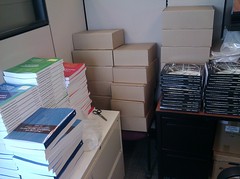
The Saylor Foundation is making spirits bright and starting the New Year right by ensuring that openly licensed, free textbooks remain freely available to students. You may have seen their press release. Their "Bookshelf" page is already up and the books that are due to go behind Flat World Knowledge paywall are now freely available. They are saving us the trouble of downloading them and hosting them ourselves.

"Each of the books listed below is freely available for download, online reading, and sharing, under a Creative Commons BY-NC-SA 3.0 license. Please share this link (and the blog post) with your networks to help spread the word!

Like many of you, we have come to rely on the free-to-read versions of the excellent texts at Flat World Knowledge. We’ve woven these books tightly into many of our free online courses, all of which rely on freely-accessible (and preferably openly-licensed) materials. When Flat World Knowledge announced recently that its previously openly-licensed books would not be available for free after January 1st, 2013, we decided to preserve the whole catalog, which we now happily share with you.

We are grateful to Flat World Knowledge for developing such an excellent catalog, and while the versions on the Flat World Knowledge website will no longer be free, the publisher continues to provide its texts at prices significantly lower than standard textbooks and with much added-value in the form of supplementary materials and interactive elements."

The Saylor Foundation certainly warrants all of our support for the coming year. I want to encourage everyone who reads this blog to seriously consider supporting this foundation. As educators, we obviously cannot rely on for-profits to keep the best interests of the students in mind.
Enhanced by Zemanta

Tuesday, November 27, 2012

OER: DE 101 Self-paced version

This is the stand-alone version of DE 101,  the curriculum we developed for our student orientation. It is released to the public with a Creative Commons license. Distance Education 101 is a two-week orientation on how to take an online class and how to be a successful online student. In this seminar, students learn specifically about College of the Redwoods' "MyCR" (Sakai) and how to use other tools to manage their time, work with others, and their information online. In this orientation students have an opportunity to create and participate in an online community where they can find help and make their connection to the online college.

We believe that our research shows that the two-week, free online orientation was largely responsible for the increase in online student success and retention. Our research is in the presentation below. I have written about DE 101 here before as well.


These course materials were designed for a student population new to technology, broad-band internet, and online communication. That is why there is such a 90s feel to the material. These materials need to be expanded to include more on online collaboration and personal learning networks. This is one of the reasons why we are releasing this on a wiki using the Creative Common's license - we want to collaborate with others who would also like to share their materials.
Enhanced by Zemanta

Monday, November 19, 2012

Kaleidoscope Grant Research Findings


College of the Redwoods is a participant in the Kaleidoscope grant. This grant helped faculty partner with other colleges to develop free, openly licensed textbooks to help students save a significant amount of money. The Community College Consortium for Open Education Resources is sponsoring a webinar with a few of the participants to discuss the results of the grant. Their invitation is below:

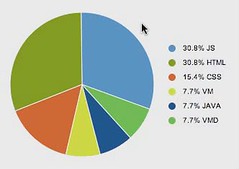
Pie Chart
(Photo credit: Dmitry Baranovskiy)
Please join us Tuesday, December 4, 10:00 am PST for a webinar on OER Research findings on student outcomes and faculty and student feedback. The Kaleidoscope project, a collaboration between six community colleges and two 4-year colleges, developed OER for eight General Education courses and will report on student learning outcomes and faculty satisfaction. Florida Virtual Campus has been administering surveys to both faculty and students using open textbooks and open educational resources at their college and university campuses through their Open Access Textbook project and will share their findings from the last three years. Another Next Generation Learning Grant funded project Bridge-2-Success has worked with non-traditional students transitioning back to college or entering for the first time to improve college success. Working with Open University UK adapted open educational resources (OER) and online data gathering, they will share student outcome data from Anne Arundel and their 20 pilot colleges.

Dr. Robin Donaldson, Director of Open Access Textbooks and Project Manager of Orange Grove, Florida Virtual Campus Robin will give us an overview of the student and faculty survey feedback from 2010 and 2011 and will compare how data has changed over time.

Dr. Nassim Ebrahimi, Ann Arundel Community College Nassim will report on student learning outcomes finding from the Bridge-2-Success project at Ann Arundel and the 20 pilot community colleges that participated.

Kim Thanos, Lumen Learning. Kim will share differences in how students performed in classrooms using OER compared to those who continued to use publisher materials. She will also report on satisfaction among faculty participants.

PARTICIPANT DETAILS
No pre-registration necessary. 
On the day of the webinar, please click here to login and then press the Connect button.
You may use a headset or dial-in to speak live:
Phone: (888) 886-3951
Passcode: 367247

PARTICIPANT CONFERENCE FEATURES
*0 – Contact the operator for audio assistance
*6 – Mute/unmute your individual line

PRIOR TO YOUR FIRST CCC CONFER MEETING, IT IS RECOMMENDED:

FOR ASSISTANCE:
CCC Confer Client Services – Monday – Friday between 8:00 am – 4:00 pm
Telephone:  760-744-1150  ext 1537, 1554 or 1542
Email: clientservices@cccconfer.orgImage licensed for reuse by loft42 cc-by-nc-sa

Enhanced by Zemanta

Tuesday, October 23, 2012

Promoting an Open Culture with Open Access Week

English: Open Access logo, converted into svg,...
(Photo credit: Wikipedia)
Open Access Week is upon us and this is a very important part of the OER equation. Quality OER is going to have to start with quality open research. There are so many concerns outside of the OER community that Open Access Week can address:
  • Where is the research going to come from for OERs and open text books?
  • How do we determine if OER and open research are "credible"?
  • How do we address publication and tenure issues with OER?
What is Open Access Week? "Open Access Week, a global event now entering its sixth year, is an opportunity for the academic and research community to continue to learn about the potential benefits of Open Access, to share what they’ve learned with colleagues, and to help inspire wider participation in helping to make Open Access a new norm in scholarship and research."


Open Access in research can ensure the widest dissemination and  use of that research. I would like to see institutions supporting research in such a way that closed options (commercial journals) are less attractive. OERs become "credible" and "reputable" when the materials used to create them come from respected open journals. The default for research should always be open. Our support will make them reputable!

Enhanced by Zemanta

Thursday, October 18, 2012

Closing Open Ed with State Authorization Rules

State seal of Minnesota
State seal of Minnesota (Wikipedia)
The Chronicle of Higher Ed reported on Minnestota's state authorization rules for distance ed that we in the California Community College's Distance Education Coordinator's group have been wrestling with as well. The state of Minnesota has told Coursera that they cannot offer free online classes in their state without authorization. I am glad this has happened because I am hoping that this will bring attention to a very complex problem that is not going to just come from Minnesota. Each state has its own state authorization rules for distance education. Getting authorized in some states can mean merely filing a piece of paper, in some states, it can cost a lot. There are serious questions about this that need to be addressed at the federal level:
  1. Freedom of speech - If someone wants to read and interact with others for free and not for college credit, what business is that of the state's?
  2. Commerce clause - Shouldn't the federal government step up to the plate on this just as they have done with other industries like health insurance?
  3. Selective enforcement issues - Why choose Coursera? Has Minnesota sent cease and desist letters to other other open colleges? What about religious colleges?
The federal government has already taken the step to say that they will not enforce state authorization. They need to go the extra mile create legislation to ensure everyone's access to education.  There should be federal guidelines for distance ed to prevent the capricious nature of these rules.
Enhanced by Zemanta

Wednesday, September 19, 2012

OER Adopter Communities: the Sustainability Factor in Open Education

Open Textbooks from the Open Course Library
Open Textbooks from the Open Course Library (Photo credit: caswell_tom)
Una Daly has invited you to the event 'September 25 OER Adopter Communities: the Sustainability Factor in Open Education' on College Open Textbooks Community!

Check out the entire Fall 2012 CCCOER Webinar Lineup

Time: September 25, 2012 from 10am to 11am
Location: online Pacific TIme zone
Organized By: Una Daly Event

Description: Please join CCCOER September 25, 1:00 pm Eastern to hear how three successful OER adoption projects built sustainable communities of faculty and staff to customize open textbooks and open educational resources to lower costs and better meet the needs of students at their colleges. Presenters from the Kaleidoscope Project at College of the Redwoods, Cuyahoga Community College, and Scottsdale Community College will talk about their challenges and achievements in finding, evaluating, and adapting high-quality OER to replace high cost publisher textbooks.

 • Danielle Budzick, Interim Director of Faculty Development, Adjunct Business Instructor & Linda Glassburn, Assistant Professor Business & IT at Cuyahoga Community College in Ohio. Danielle and Linda worked with the other Business Communications instructors at Cuyahoga college to adopt an open textbook from Flat World Knowledge and revise it to meet college learning outcomes.

A Wikiversity Logo for Open Educational Resour...
(Photo credit: Wikipedia)
 • Geoff Cain, Director of Distance Education at College of the Redwoods in California and an instructional designer on the Kaleidoscope Next Generation Learning Grant. Geoff worked with Biology Instructor Wendy Riggs to find and adapt open educational resources to improve student learning outcomes and replace publisher textbooks.

 • Dr Donna Gaudet, Developmental Math Professor at Scottsdale Community College in Arizona. Donna and her colleagues in the Math Department have been finding and adapting open textbooks and open educational resources for over two year to improve student understanding of developmental math and replace their former expensive curriculum.

 PARTICIPANT DETAILS
No pre-registration necessary. On the day of the webinar, please click here to login and then press the Connect button. You may use a headset or dial-in to speak live: (888) 886-3951
Enter your passcode: 918603

 PARTICIPANT CONFERENCE FEATURE
*0 – Contact the operator for audio assistance
*6 – Mute/unmute your individual line

PRIOR TO YOUR FIRST CCC CONFER MEETING, it is recommended that you:
Test Your Computer Readiness

FOR ASSISTANCE: CCC Confer Client Services – Monday – Friday between 8:00 am – 4:00 pm See more details and RSVP on College Open Textbooks Community:
Enhanced by Zemanta

Wednesday, August 22, 2012

Implementing OERs and Open Textbooks

The Engineering Building at the University of ...
The Engineering Building at the University of Leicester. Designed by James Stirling.(Wikipedia)
There is still a lot of energy out there around the creation of open content and the licensing of existing content with open licences. There are many worthwhile projects out there that are interested in creating OERs such as SCORE in the UK. But how do we use these materials effectively? How can we roll out this content in the most effective manner? Who is evaluating these materials for quality? These are common questions about OERs and they point to an evolutionary history of OERs: creation, repositories, evaluation, assessment, and implementation. There are three projects worth taking a close look at even if you are already aware of them because there are common themes arising in OER implementation. 

 The OSTRICH Project - "The OSTRICH project, funded by the Higher Education Academy and JISC, and led by the University of Leicester, will transfer and cascade the key outcomes of Leicester’s institutional open educational resources (OER) pilot project, OTTER, to the universities of Bath and Derby." Why do you need to know about this? Because their blog provides an excellent model for implementing and assessing OERs. You can follow the evolution of their implementation step-by-step through their blog.

Kaleidoscope Project - "Project Kaleidoscope is implementing a set of fully open general education courses across eight colleges serving predominantly at-risk students. The project will dramatically reduce textbook costs and allow collaborative improvement of course design to improve student success." This project built assessment and peer review into the implementation process. The genius of the project is that it brings multiple colleges together not only to review OERs and open textbooks but to find common course outcomes and develop common assessments. This is a critical stage in the history of the implementation of OERs. This project shows that inter-institutional collaboration is a key factor in OER implementation success.

SAIDE ACEMaths Project - "The aim of the SAIDE ACEMaths project was to pilot a collaborative process for the selection, adaptation and use of OER materials for teacher education programmes in South Africa. Our latest research article entitled Collaborative Design and Use of Open Educational Resources: A Case Study of a Mathematics Teacher Education Project in South Africa by Ingrid Sapire and Yvonne Reed was published in Distance Education vol. 32 no. 2 August 2011." 

OPAL: Open Education Quality Initiative - "Open educational resources, and open education more generally, are considered to have huge potential to increase participation and educational opportunities at large and to promote widening participation and lifelong learning. At the same time, the past decade has shown that openness in itself is not enough to unfold this potential. It is important to shift the focus more to the actual open practice of using, reusing, or creating open educational opportunities: open educational practice." They have published numerous case studies on the implementation of OERs. 


Each one of these projects emphasizes collaboration in one way or another. Instructors are learning how to work together to reuse, remix, and share OERs through these projects, but beyond that, they are identifying the practices that will make the implementation of OERs successful. 
Enhanced by Zemanta

Tuesday, May 15, 2012

OER: Indigenous People's Reader

Jacqui Cain has edited a reader for developmental English classes that includes indigenous people's stories from around the world: stories translated from oral traditions. She did this presentation for the 2012 Online Teaching Conference which starts in June as part of their virtual presentations track.


The reader will be available at the end of the summer.

Monday, March 26, 2012

OER Policy Registry: Request for Help

Image representing Creative Commons as depicte...Image via CrunchBaseCable Green just lit the Bat Signal!

Greetings Open Colleagues,

The open community shares a need for more information to help us with our work. We know, for example, that there are many policies supporting open education at institutions and governments throughout the world. Many of us know of some of these policies, but it would be extremely helpful if we had a single database of open education policies that the entire community could access and update.

To meet this goal, Creative Commons has received a small grant to create an “OER Policy Registry.” The Open Educational Resources (OER) Policy Registry will be a place for policymakers and open advocates to easily share and update OER legislation, OER institutional policies and supporting OER policy resources. We have begun to enter OER policies into the registry, but we need your help to make it a truly useful global resource.

The open movement is reaching a stage where we’ve had some real, concrete OER policy victories and there is the potential to achieve many more. Sharing our collective knowledge of existing OER policies, in the same way we believe in sharing educational resources, will help advocates and policymakers worldwide be more successful.

Please join the effort:
(1) Contribute any OER policies you know about via this Google form.
  • We are collecting both legislative AND institutional (non-legislative) OER policies from around the world. Your form submissions will be added to the draft list of OER policies.
(2) Review the draft list of OER policies. (Google doc)
(3) Forward this message to your colleagues, lists, blogs, and other channels, to ensure that we get as much input as possible. As the OER movement is global, it is critical that we capture OER policies from around the world.

Anyone can add OER policies to the Google form through the next month. Beginning May 1, the OER Policy Registry will move to the Creative Commons wiki. At that point, anyone will be able to edit and update the OER Policy Registry on the wiki, and all contributions will be licensed under CC BY.

We’re starting with a Google form because (a) it’s easy and (b) wikis require you to create an account before editing, and that may be a barrier to participation.

CC is in contact with other projects that collect similar information, including UNESCO, CoL, the Florida Distance Learning Consortium, EU OCW and a project in New Zealand. We will add OER policy data they gather as it becomes available. If anyone knows of other efforts to gather OER policies, please send them to Anna Daniel (anna@creativecommons.org) and we will reach out to them too.

If you have any suggestions or feedback on the content and/or framework, please let us know.

Warmest regards and thank you!

Cable
Enhanced by Zemanta

Wednesday, February 29, 2012

OERs and Biology at Collge of the Redwoods

On Tuesday, March 6, 2012 at 4:00 PM PST Geoff Cain & Wendy Riggs present on switch from a commercial textbook to open education resources for a Biology course for non-Biology majors at College of the Redwoods, a two-year community college. They will talk about how they found and evaluated and adapted materials, and the triumphs and challenges they met along the way. College of the Redwoods is a partner with the Kaleidoscope grant, an NGLC grant supporting the implementation of open textbooks.

This event is one of many in celebration of Open Education Week.  There are many events going on around the web - be sure to check out the calendar of webinars that will be happening around the clock from around the world!.

Participant Details
  • Dial your telephone conference line: (888) 886-3951
  • Enter your passcode: 274076
  • Go to www.cccconfer.org
  • Click the "Participant Log In" button under the "Webinars" logo
  • Locate your meeting and click GoFill out the form and click connect
Time: Tuesday, March 6, 2012 at 4:00 PM PST UTC-8 hours (other time zones)
Enhanced by Zemanta

Friday, February 03, 2012

Beating the High Cost of Education with Open Textbooks

I wrote this as a Tech Beat article for the Times Standard:

Jonas is a 20-year-old College of the Redwoods student. He works part-time at a local auto shop and wants to one day open his own business. He needs to take classes in business and mathematics to help him be successful. Because he works, he barely qualifies for any financial aid, but he was just able to save enough money to cover the cost of school and can make it if his financial aid will pay for the required textbooks.

On the first day of class, he discovers that his financial aid check won't arrive until two weeks after classes have started. Jonas will eventually buy his textbooks and catch up. Some students wait even longer and succumb to the temptation of just “winging it.” They try to get by without buying the textbook at all.

As you can see, Jonas, like many students in California, has a problem. The cost of education is rising twice as fast as the rate of inflation; it is rising even faster than the cost of healt
Image representing Creative Commons as depicte...Image via CrunchBaseh care. The average student spends over $900 a year on textbooks. In many cases, the cost of the textbook is higher than the cost of the class (from Student PIRGs).

One innovative answer is “open textbooks.” What is an open textbook? An open textbook is one that is free, and instead of a traditional copyright which limits what a teacher can do with a text, it is either in The public domain or the author has used what is known as the Creative Commons licensing -- the author retains ownership but spells out exactly how a textbook can be used (seehttp://creativecommons.org). These textbooks are available electronically at online repositories like College Open Textbooks and CK-12 which offers “customizable, free, curriculum aligned content for k-12." Open textbooks can also be available in hard copy editions for significantly lower costs.

Using open textbooks and learning objects can be just as effective and, in many cases, more effective than a commercial textbook. Why? Commercial textbooks are a one-size-fits-all proposition. Because learning objectives and outcomes differ from institution to institution based on the needs of the local communities, main faculty already have to adapt and remix commercial texts for the needs of the student populations, often in the form of additional, costly supplements or multiple books. What I have found in my work with open textbooks is that textbooks are often supplanted (not supplemented) by openly licensed video, audio, images (and yes, open textbooks), making the course even more engaging for the students.

The real value to the authors of open texts is that they are not drawing on their own work alone, but they are getting access to a community of authors, revisers, practitioners, researchers and adapters -- a community of scholarship that will support the work of the textbook. A commercial textbook cannot take into account the social and economic conditions of the local community. A traditional commercial college textbook cannot be adapted to the deficiencies or advantages of the local high school. You can, for a price, however, buy “supplements,” which is the hole card of the commercial publisher of not-quite-entirely-unlike open textbooks. Why let book printers in another state determine the needs of your community? A community of scholars can support an online English grammar better than any book publisher trapped in the two-year publishing cycle model. These conversations and decisions should be happening in colleges and schools, not corporate boardrooms.

The math department at College of the Redwoods is already addressing this issue. They have classes that include free textbooks authored by the faculty. The textbooks are available for free online, on CD, or for a nominal cost in the college bookstore if the students prefer a hard copy. These books are written by local instructor swho are aware of the particular problems faced by the local student population. For the math department, the textbooks did not seem adequate, and they were too expensive, so instructors like Dave Arnold, Bruce Wagner and others in the department wrote or contributed to their own textbooks that include online help, examples and online quiz banks.

And fortunately for Jonas, California Senator Darrell Steinberg has proposed legislation to save California college students hundreds of millions of dollars a year in education costs. At a time when education affordability is at the forefront of national debate, this legislation would give students free access to open textbooks for 50 lower-division courses. These books would be available electronically through a “digital open source library,” with a print versions offered for around $20.
Enhanced by Zemanta

Monday, January 23, 2012

Open Education Week Coming in March

This from Cable Green at Creative Commons: "Join your colleagues around the world to increase understanding about open education! Open Education Week will take place from 5-10 March 2012 online and in locally hosted events around the world. Image representing Creative Commons as depicte...Image via CrunchBaseThe objective is to raise awareness of the open education movement and open educational resources. There are several ways you and your organization can be involved..." He then goes on to list several ways - provide a pre-recorded presentation of your work in OER, host a webinar, etc. There is a form at the bottom of the announcement.This is an important organization to support: they have literally redefined copyright in favor of both the consumers and producers in an age where the lines between the two are dissolving quickly. As they put it at Creative Commons: "The idea of universal access to research, education, and culture is made possible by the Internet, but our legal and social systems don’t always allow that idea to be realized. Copyright was created long before the emergence of the Internet, and can make it hard to legally perform actions we take for granted on the network: copy, paste, edit source, and post to the Web. The default setting of copyright law requires all of these actions to have explicit permission, granted in advance, whether you’re an artist, teacher, scientist, librarian, policymaker, or just a regular user. To achieve the vision of universal access, someone needed to provide a free, public, and standardized infrastructure that creates a balance between the reality of the Internet and the reality of copyright laws. That someone is Creative Commons."

Enhanced by Zemanta

Thursday, January 19, 2012

OERs: Why Commercial Electronic Textbooks Are No Bargain

Earlier this month, there was a posting at the California State Library blog that said that, according to a Dayton College study, the savings for students using electronic textbooks was only a dollar: "Despite the promise that digital textbooks can lead to huge cost savings for students, a new study at Daytona State College has found that many who tried e-textbooks saved only one dollar, compared with their counterparts who purchased traditional printed material." This came as no surprise to me. Electronic textbooks in themselves, especially those sold by businesses, solve the problem of distribution and printing costs to the commercial publisher, but not the problem of cost to the students and schools (or as the commercial publishers refer to them "the customers"). The study show that there are some cost saving in many circumstances but the cost of education and textbooks is currently rising faster than inflation or health care manifold over.

NEW YORK, NY - SEPTEMBER 12:  A view of the Mc...Image by Getty Images via @daylifeThe real solution to this problem is not just electronic textbooks, but textbooks that are also openly licensed. That means the textbooks are licensed in such a way that they are available to students and schools for free (such as the alternative to traditional copyright "Creative Commons"). These textbooks tend to be created by teachers for teachers and students in a particular context. They are then fully editable by other teachers to adapt to the particular needs of their students. According to the Dayton College study, nearly 1/4 of students who responded said they took fewer classes in a semester because of the cost of textbooks, and 29% of the students avoided purchasing a textbook because of its high cost at least once. Again, from the study, "During three of the project’s four semesters, students enrolled in some of the e-text pilot sections paid only $1 less for rental of their e-texts than students who bought a printed book due to publisher pricing decisions. These students were also unable to recoup a portion of expenses by selling the textbooks back to the on-campus bookstore when the course ended, which increased their disappointment."

The study, described at the CSL blog, was "conducted over four semesters, compared four different means of textbook distribution: traditional print purchase, print rental, e-textbook rental, and e-textbook rental with an e-reader device. It found that e-textbooks still face several hurdles as universities mull the switch to a digital textbook distribution model." None of this solves the problems for the students or schools. Electronic textbooks are a real temptation now for commercial enterprises because when you eliminate printing, storage and distribution, textbooks become very profitable. I am not excited when any corporation gets involved in the textbook business, even if the model is even sort of open. The whole point of business is to make a profit. I understand that, but there are appropriate and sustainable business models and old and broken ones. We do not privatize the police and generally the military (yes, there is Blackwater, but you see the problems that arise when you do it!). Our education should not be left in the hands of the profiteers. Even the somewhat more open than most publishers, like Flatworld Knowledge have a bottom line.

I can show numerous examples of outstanding open textbooks that are outstanding not just because they are "cool," have a great interface, and come with expensive supplements, but because they are incredibly effective. And no one can sell you that textbook even if they wanted to because the ones I am thinking about were created by a local community (our math department at College of the Redwoods for instance), meant to tackle problems in local schools, and address the needs of the local students. I can't sell you that book, but what I am willing to do is to talk to any educator, anywhere, who is interested in building that kind of community in your own school. This is a different philosophy than the commercial model (and no, that doesn't make me a "red") - it is a philosophy that says that learning and knowledge exist in the community and can't be commodified.
Enhanced by Zemanta

Friday, December 16, 2011

Help Shape Creative Commons 4.0

Creative CommonsImage by jorgeandresem via FlickrThis just in from the ubiquitous Cable Green:

Creative Commons has officially opened the public discussion process for version 4.0 of the CC license suite. Please see the announcement below, and join the discussion by subscribing to the CC license discussion list (link in blog post, below).

As we all know, the core part of any OER definition is the educational resource is either openly licensed or is in the public domain... so anyone can: reuse, revise, remix and redistribute. This is your chance to affect the licenses we all use to share OER.

One of the many reasons CC is considering versioning the licenses at this time is to address how can we improve the attribution requirements to ease citation in open educational resources (OER).
What would you like to see changed?

Starting now through February we are holding a requirements gathering period, an important (if not the most important) time to contribute ideas for improving the license suite. We hope you'll join the discussion and share your ideas for how we can improve the licenses for use with public sector information and data. And please do help us spread the word.

http://creativecommons.org/weblog/entry/30676
Enhanced by Zemanta