Showing posts with label OER. Show all posts

Thursday, July 17, 2014

Death of the Book Redux

Ludwig Wittgenstein
Wittgenstein (from Wikipedia) 
I don't know if this is related to climate change or the polar vortex, but the yearly declaration that the book is dead or dying is early this year. Naomi S. Baron, in her article "How E-Reading Threatens the Humanities" is the latest. Never mind the fact that with every new change in technology, there is resistance to the change. Socrates was suspicious of writing itself because it took away from relying on memory. Writers like Sven Birkerts have been writing wistful epitaphs on books and culture for years, if you are not familiar with him, his book "The Gutenberg Elegies: The Fate of Reading in the Electronic Age" might be hard to find now in paperback but it is available in a Kindle edition.  The article is filled with anecdotal evidence from experiences with her students and she asks:

Are students even reading Milton or Thucydides or Wittgenstein these days? More fundamentally, are they studying the humanities, which are based on long-form reading?

As a former English teacher, I would say that is not their job but ours as teachers. It is our job to show them why Milton, Thucydides or Wittgenstein are relevant. The humanities have always been in crisis because most students expect to get training in college that will allow them to get work afterwords. It is our job as instructors to show them that despite that goal, everything they learn in humanities courses will only help them later.

When I first entered college in the 80s, I read about the death of the book, the death of the humanities, and read articles about the importance of a liberal arts education. This is probably just the nature of journals like the Chronicle of Higher Ed, but you rarely see articles like this from state or community colleges. They always seem to come from the hallowed halls of the Ivy League where instructors can afford the luxury of sitting in big libraries reading old leather bound books. What these instructors are really afraid of is the change in the technology. The technology makes paying hundreds of dollars for a text irrelevant and wasteful. There are too many new ways to deeply engage in an online text. I would recommend that anyone who is interested in this read Innovating Pedagogy 2012, the first article is called "New pedagogy for e-books." There are a number of tools that allow for commenting, highlighting, and discussing texts. I would especially include here:

  • NB from the Haystack Group at MIT's CSAIL. This site allows instructors to upload PDFs and then students can bookmark, highlight, add comments, and discuss the text with the class.
  • Diigo allows students to bookmark, highlight and comment on online texts and then share those bookmarks.
  • Bounce - Students or teachers can select regions of a webpage, annotate, and share the URL of the annotated page with others, who may also comment.
  • Google Docs - Any text can be uploaded to Google Docs and shared with a class that can highlight and comment on that text.
  • And just about any wiki like wikispaces.com are good collaborative spaces to share and comment on texts. 
There is something exciting about holding a device in my hands that is connected to the largest library in the world. I can thoughtfully read on an iPad because I can annotate a text, bookmark, connect with others who are reading the text and if the author is alive, I can even send an email.

I see both sides of the argument - we do lose something whenever new technology is introduced. But sometimes we gain things as well. Every shift in communication technology has led to some kind of disruption, but also a benefit. We should learn from that history: moveable type got rid of scribes but eventually lowered the cost of books. One of the many ironies about all of this is that I know more people reading the classics right now because they are free downloads via Kindle, Google Books, Gutenberg, and the University of Pennsylvania's Online Books page.

We have a Biology teacher here who used an online, open textbook (openly licensed via Creative Commons) for his online and face-to-face Biology courses. Our survey tells us that these students felt that there was no difference between their experiences with the etext than with a commercial hardcopy except commercial text was too expensive!

It is up to instructors to work out how best to use this technology. There is a right way and a wrong way. Instructors should be asking questions about how best to leverage the technology into new opportunities for teaching and learning. There are a lot of tools here to harness towards the end of making the humanities engaging. Where Baron sees distractions, I see opportunities for engagement and deep learning. What Baron is really saying is that the old methods of teaching do not work in the connected age; I am not sure why that is news.

Friday, April 04, 2014

Reports on the Death of the Book are Greatly Exaggerated

William Shakespeare
William Shakespeare
I was at a poetry reading at the library a while back and one of the poets had a poem about how lost in cyberspace everyone is and the implication was that he was seeing the end of print culture and the book. Never mind that there was not an empty seat in the house to hear a poetry reading on a Thursday night! But there we have it - technology is phasing out the book. But it is just changing media. We don't need hand copied books either. More and more books are being written electronically and read on electronic devices. This isn't news. What is funny is to watch people with one foot in the old paradigm trying to make sense of the new. This includes myself. I have always thought of books as something that I had to own. They are objects to be held and even if they are not held in my hand, they must be contained in something that I own!  I had a funny thing happen the other day. I was downloading an ebook onto my iPad and I got an error message that said my iPad was full. I was incredulous. How could this happen? I have 16 gigabytes of space! I went through Kindle and iBook to take a look at what happened. I downloaded a lot of books. My electronic book shelves had swelled to the autodidactic, polymathic, bibliomaniacal proportions that my home bookshelves used to have. I got onto a vintage, historic cookbook jag and that cost me some room. I have the Washington DC Cookbook from the turn of the century which allowed me to send my actual hard copy to my Best Man, Steve Boutchyard, who is currently in culinary school. But I also have a copy of Beeton's and numerous others. I had the complete works of Poe; a raft of Elizabethan playwrights that are not Shakespeare as well as the complete works of the Bard; numerous volumes of Balzac; a complete library of philosophical works; everything related to Art History that is free in iTunes and Google Books that is downloadable and the list goes on. And so here I am, just like I was in the 80s, before I had a computer, with book shelf issues. I have noticed an uptick in people talking about classic literature and I think it is because so much of it is freely available in accessible formats via places like Gutenberg.org. I also have a couple of ebooks that I actually bought that I am reading with no small amount of irony: I am reading an electronic book about a physical archive where the author is able to convey in deeply poetic detail what it is like to work with the physical texts that go back hundreds of years in the Paris police archives.

English: A Picture of a eBook Español: Foto de...I still own a lot of physical books, but not nearly as much as I used to since the dawn of the internet. I love a good physical copy of a book as much as anyone: there are some books that I have that are gorgeous old books with fine bindings, thick paper that has the wire ridges where the paper dried on a screen, and beautiful fonts that press deeply into the paper. They have a texture and presence that you can't get from an etext. That said, I was looking for a book on Ausonius on line today and I found what I was looking for on Amazon and the physical book was going for $540. And you can bet they are not being as thoughtful about design and fonts as they once were. Needless to day, the electronic version of an equivalent text from Google Books at no cost will suffice.

In the late 90s, I thought that there would be no limit to the amount of books I could put on a computer. So how I could eat up 16 gigs is just incredible; a bit is the smallest unit - a 1 or a 0, on or off, a byte is 8 bits which make a single character, 10 to 15 bytes go into a sentence, and a megabyte is 1,048,576 bytes, and a gigabyte is a 1000 megabytes. And I had 16 of those! If you are using an Apple or Android product, you probably already know about the iBook and Google Book apps, but there are other sources of free books. If you want to fill up your iPad or eReader quickly with free books I would suggest spending a rainy afternoon browsing:

  1. Gutenberg.org
  2. The Online Books Page from the University of Pennsylvania
  3. The Internet Archive's Digital Books Collections
  4. Forgotten Books  
  5. The Sacred Text Archive
  6. World Digital Library
  7. ManyBooks.net
  8. Libravox - free audio books

On top of all of that, there are the numerous texbooks that are licensed with the "Creative Commons" license that you can download through various repositories like the Open Textbook Library and College Open Textbooks. There, I just exploded your iPad!
Enhanced by Zemanta

Friday, January 31, 2014

Open Textbooks and Student Success

Cable Green
Cable Green (Photo: Jeffrey Beall)
The tirelessly brilliant and ubiquitous Cable Green sent out today's announcement from Creative Commons about the U.S. PIRG Education Fund report called, “Fixing the Broken Textbook Market: How Students Respond to High Textbook Costs and Demand Alternatives." This report reinforces what the research is already showing - open textbooks can be a significant contributing factor to student success. The results we saw with projects like the Kaleidoscope Project was that students were actually doing better in courses that were using openly licensed, free textbooks. There are a number of reasons for this, but one of the reasons at College of the Redwoods was that the faculty created textbooks were written for a particular student population to solve particular problems. The books actually addressed the needs of the community. You can still find articles out there about the so-called suspect quality of open education resources, but they are being written by folks who have not looked at what is out there now.  Articles like “The cost and quality of open textbooks: Perceptions of community college faculty and students” by TJ Bliss, John Hilton, David Wiley, and Kim Thanos go a long way to dispel those myths as does "A Preliminary Examination of the Cost Savings and Learning Impacts of Using Open Textbooks in Middle and High School Science Classes," by David Wiley, John Levi Hilton III, Shelley Ellington, and Tiffany Hall.

Commercial textbooks have their own myths to deal with - like whether or not they are reliable!

This is a very dynamic time to be involved in open textbooks!
Enhanced by Zemanta

Tuesday, November 26, 2013

eLearning 101: An Open Class for New Online Learners

Humboldt State University
Humboldt State University (Wikipedia)
Our new class is slowly taking shape. The course will be based on our old DE 101 (Distance Ed 101) which in turn was based on HIM 100 (a Health Information Management class where we introduced students to networked learning). It is also based on my experiences with CCK08 (the Connectivism and Connective Knowledge course facilitated by George Siemens and Stephen Downes) and DS 106 (Jim Groom's project-based digital storytelling class), both of which I think represent the best of the MOOC idea. I was calling our course a MOOC but I am absolutely disgusted with some of the online classes that are going under that name right now - I would not want to give my faculty the idea that we were following a model that didn't build in student support, or value engagement and interaction, and valued venture capital over learning. I believe that we can create an open course that uses the best of these classes, uses actual research into the needs of our students, and then help students learn to be independent, life-long learners, with a dynamic learning community that they can take with them through college and into their professional lives.

The structure of our course owes a lot to the excellent work of Humboldt State Universities instructional designers, like Riley Quarles who has developed the structure of the blogs for our Child Development program. Dan Fiore, another instructional designer I am working with, is putting together Wordpress and an open badge system.

The students for this course are new to online learning, but of the 1600 students who responded to our survey, 95% use Facebook. At the typical university that hosts MOOCs, there is a higher level of motivation and skill sets (Stanford for instance). What we know about this population is that we need to have modules on things like time management, online communication skills, motivation, study skills, and how to create a personal learning network. One of the key purposes of the course is to help the students figure out how to form online learning communities for academic and professional support. We do have a module called "LMS" (learning management system) and that is specific to our campus' installation of Moodle - other campuses could insert their LMS of choice there.

The MOOCs that I have participated in were made up mostly of grad students and education professionals. My work has mostly been in community colleges and state colleges, so the tools and skills we are teaching are different.

Where we are now:

1. We are using Wordpress. There will be a main course blog that will link all the topics of the course (which may be on pages or separate blogs). The facilitators will have blogs as will the students. The students will choose or create an assignment on the topic and post to their blog. This feed will be aggregated on the topic blogs.

2. We are using open badges. I know that motivation is an issue in online classes in our university system, and all the research I have read says that badges are one of the ways to address that issue. Plus, I want the students to have a

3. We are gathering data. We have sent out a survey to our students to see how they are accessing the web, where they are accessing it, and what tools they are already using. The course is based on previous courses and orientations I have created but each is different according to the needs of the student population. For instance, at Tacoma Community College, we had more students involved in virtual worlds like Ever Quest and Second Life. Humboldt State only had 6% of the respondents in online games.

4. Updating course materials. The course materials are from previous courses and orientations. All of the modules will be openly licensed with a CC-NC-SA license.

5. Getting out to the learning communities and asking people to help get out and push. I went to the Open Ed 13 conference to learn more about open badges and to meet more people who are teaching in MOOCs. I will be presenting on this at the DET/CHE conference in San Jose next week.

The illustration below is s rough sketch that is evolving - this is not meant to be a traditional hierarchical course but student driven: the student chooses which modules are important, the student chooses the assignments from the module (or creates one) and gets together online with students to complete the work.


I would love to talk to anyone who is working on a similar project. Feel free to email me or leave a comment. I will also post updates and my presentation here as things take shape. 
Enhanced by Zemanta

Friday, November 15, 2013

Durbin, Franken Introduce Legislation to Help Make College Textbooks More Affordable

U.S. Senator Richard Durbin, of Illinois.
U.S. Senator Richard Durbin, Ill.
 The cost of new textbooks has increased 82%, three times faster than inflation, over the last decade.

[WASHINGTON, DC] – U.S. Senators Dick Durbin (D-IL) and Al Franken (D-MN) today introduced legislation designed to help students manage costs by making high quality textbooks easily accessible to students, professors and the public for free.  This bill, known as the Affordable College Textbook Act, would create a competitive grant program for institutions of higher education, working with professors and other organizations, to create and expand the use of textbooks that can be made available online and licensed under terms that grant the public the right to freely access, customize and distribute the material, also known as “open textbooks”.

“My home state of Illinois provides an example of how the bill I am introducing with Senator Franken can be successful,” said Durbin.  “Over three years ago, I worked to secure funding for the University of Illinois to complete an open textbook project.  The University, working with faculty, identified sustainability as the topic for the project and an area of study in need of such open resources. Since 2012, the textbook that was produced from this effort – Sustainability: A Comprehensive Foundation – has been in regular use at the University of Illinois campuses. The book has been used in a Massive Open Online Course that has been sampled by at least 60,000 students.  At least a dozen schools throughout the country have either contacted the University of Illinois about the text or are using it.  This bill can replicate and build on this success and help make the cost of attending college more affordable.”

“In the fight to make college more affordable and accessible for Minnesota families we can’t overlook the rising costs of textbooks,” said Franken. “I’m proud to introduce this bill with Senator Durbin because it will help provide cheaper alternatives to traditional textbooks and keep more money in students’ pockets where it belongs.”

Textbook costs are one of the most overlooked costs of going to college, but they can be substantial and can be a barrier to attaining a college education.  According to College Board, the average student budget for college books and supplies during the 2012-2013 academic year was $1,200.

“Students can’t afford to pay $250 for a single textbook. In fact, U.S. PIRG found that seven of ten current college students have skipped buying a textbook because it was too expensive. It’s clear that the current big-publisher system isn’t working for students, and needs to change,” said U.S. PIRG Higher Education Associate Ethan Senack.  “For students, the cost-saving potential of open textbooks is massive - around 80-100% compared to published textbooks. We thank Senators Durbin and Franken for championing this innovative solution to the high cost of textbooks.”

Today’s legislation expands on the 2008 Higher Education Opportunity Act which contained provisions from Durbin’s College Textbook Affordability Act that aimed to make more information available to students looking to manage college textbook costs.  Durbin introduced his bill after learning of troubling practices by the publishing industry to create new textbook editions with little new content to drive up costs and bundle additional and often unwanted materials to required texts at students’ expense.  The 2008 law required textbook publishers to disclose to faculty the cost of a textbooks to their students, required schools to publish textbook information in course catalogues when practicable, and required publishers to offer unbundled supplemental materials so students had choices.  The provisions took effect on July 1, 2010.

While a June 2013 GAO Report required by the law found that students had more information and publishers and schools were generally complying with the new disclosure requirements, it also found that the price of textbooks had continued to rise.

“Textbook prices are simply unaffordable and have become a barrier to academic success for too many students,” said Nicole Allen, Open Educational Resources Program Director for the Scholarly Publishing and Academic Resources Coalition.  “This bill would help more colleges leverage open educational resources to make higher education more affordable and accessible for all.”

“The dirty secret about textbooks is that they don't have to be so expensive given the rise of technology. Even worse, if you put textbook debt in larger context with student debt, the affordability of college is becoming less and less tenable, and, as a result, the American dream is becoming more difficult for the next generation to attain,” said Matthew Segal, co-founder of OurTime.org

The limited federal investment in the creation and expanded use of a set of high-quality, introductory level college textbooks outlined in the Affordable College Textbook Act can improve learning, access, and affordability for all college students.  Making high-quality open textbooks freely available to the general public can significantly lower college textbook costs and increase accessibility to higher education.  Open textbooks can also improve learning and teaching through course materials that are more flexible, adaptable, and accessible for professors.

Specifically, the Affordable College Textbook Act:
  • Creates a grant program to support pilot programs at colleges and universities to create and expand the use of open textbooks with priority for those programs that will achieve the highest savings for students;
  • Ensures that any open textbooks or educational materials created using program funds will be freely and easily accessible to the public;
  • Requires entities who receive funds to complete a report on the effectiveness of the program in achieving savings for students;
  • Improves existing requirements for publishers to make all textbooks and other educational materials available for sale individually rather than as a bundle; and
  • Requires the Government Accountability Office to report to Congress by 2017 with an update on the price trends of college textbooks.
The Durbin-Franken Affordable College Textbook Act is supported by the following organizations: U.S. PIRG, the Scholarly Publishing & Academic Resources Coalition, American Association of Community Colleges, National Association of College Bookstores, National Association of Graduate and Professional Students, OUR TIME, Creative Commons and the OpenCourseWare Consortium.
Enhanced by Zemanta

Tuesday, November 12, 2013

OER: SALSA - an open source syllabus builder

The open source, web-based SALSA (Styled & Accessible Learning Service Agreements) is a
syllabus authoring tool from Utah State University’s Center for Innovative Design & Instruction. It is based on the design of the PDF Syllabus Builder. No registration of any kind is required to use Salsa.

According to their website, Salsa generates a unique and random hyperlink for instructors. Instructors an bookmark or copy the hyperlink with the "My SALSA" button, and "use the hyperlink to return and edit their SALSA. Publish your SALSA to generate a new hyperlink to a "read-only" copy of your Salsa in PDF or HTML format."

I am interested in this because I think that this is another tool that can help instructors who have to work with learning outcomes to do it effectively and consistently. I prefer the kind of learning where the students decide what the outcomes might be around specific topics but even that kind of learning has a "meta-outcome" of being able to work with a group to develop course outcomes. And there are accrediting agencies that ask for them. SALSA uses Bloom's Taxonomy, built right into the tool, to help instructors author the outcomes.  I think it is helpful for students in a program to have some kind of consistency and connection of course outcomes with the class, the program, and the college.

This is also a way to get faculty and programs that need to work on student learning outcomes to see how they can be used in a practical way. If you have other tools for working with student learning outcomes, I would love an email or a note in the comments section.

Thanks!
Enhanced by Zemanta

Thursday, November 07, 2013

Open Ed 13: How to Make It Work for Faculty: A study of how Washington Community and Technical Colleges Use Oer

Boyoung Chae and Connie Broughton discuss the Open Course Library for Washington State's 
 Community and Technical Colleges.

"While new open educational resources are being continuously created, little data exists on how faculty in higher education actually use and perceive open educational resources, and more importantly what types of support faculty need to help them implement the open educational resources. After developing the Open Course Library, Washington State Board for Community and Technical Colleges (SBCTC) conducted a study of how faculty at the 34 system colleges use OER. The purpose of the study is to investigate
  1. how and to what extent open educational resources are being used in the college classroom, 
  2. how faculty perceive open educational resources, 
  3. what type of support is needed to help faculty embrace the open educational resources.
In this study, a mixed-method design was used incorporating both quantitative and qualitative study methodologies. We began our study by developing an extensive survey in collaboration with two faculty unions of the community and technical colleges in the state of Washington. The survey was sent to all faculty in the system. Based on the survey results, we conducted a qualitative Delphi study. Delphi is a collective human intelligence process among experts, in this case, a focus group consisting of open educational resources experts in Washington CTC system. The group discussed what constitutes the best support system for faculty's use of open educational resources.
Based on the data collected from survey, and the consensus from the qualitative Delphi study, we created a conceptual framework that informs faculty's needs, use, expectations, and most importantly the types of support in using open educational resources.

This study will provide a roadmap for anyone who organizes the future professional development plan for open educational movement in higher education. It will remind the audiences of the most crucial aspect of building and promoting open educational resources: how to make it work for faculty."

Conducted a state-wide survey of WA community and technical college teachers, they got 730 responses and will follow up with phone interviews. 

83% of the faculty had heard of OER, and follow up questions showed that they understood what OER actually were. 67% previously searched for OER for their classes. 60% had used OER in their teaching practice.

Reasons for not adopting
  • Hard to find appropriate resources
  • No quality materials available
Conclusions from the survey was tha tth faculty needed and wanted more training and professional development activities.
Enhanced by Zemanta

Open Ed 13: A Red Hat for OER: Lumen's Journey

Kim Thanos and David Wiley talk about their business, Lumen Learning.

"After a decade and $100M US in foundation funding, an incredible amount of high quality open educational resources exist which are only rarely used in formal settings. The situation feels very much like it did with open source software a decade ago. At the turn of the century, almost everyone had heard of open source and was interested in potentially saving money and improving the stability and quality of their technology offerings, but very few institutions had either the bravery or the capacity to run systems for which there was no formal training and no technical support. Red Hat stepped into this vast pool of curiosity and caution with training, technical support, and other services that put adopting Linux within the reach of a normal institution.

Lumen is trying to do exactly same thing – step into the deep pool of curiosity and caution around open educational resources with the faculty training, academic leadership consulting, technical and pedagogical support, learning analytics services, and other pieces necessary to put adopting OER within reach of a normal institution. In the past year we've worked with dozens of secondary and post-secondary institutions and learned many - sometimes painful - lessons.

In this presentation we'll review our first year of lessons learned, including what works, what not to do, and how our business model has evolved over our first year."

Their 90/10 goal is to lower the cost by 90% and increase success by 10%. Success = C or better.

The OER are free but they charge for their time to come in and support the OER roll-out. 

60% of students do not purchase a textbook at one time because of cost.
23% never buy textbooks. 

Lumen wants 100% of the students to have access to free, digital materials from day one. They decided to go with .com like Flatworld Knowledge. It is a company because "their is not enough diversity" in the OER landscape. Their model is like MoodleRooms or rSmart. This is the "sustainability" question. 

Candela OER Services from Open Learning provide training, best practices for implementation, online and phone support, analytics, LMS integration, long term access to course data. Providing services to help institutions adopt and implement.

Courses
  • Full math sequence
  • Full dev ed
  • Gen Ed and Business
  • 65 highest enrolled courses in Gen Ed and business
Perils of the Business Model
  • Transition from studetn budget to institutional budget
  • Our absolutes, no pay wall, no raping and pillaging
  • Our preferences - one time services as needed, but focus on sustained, supported improvements
  • What is the right bundle?er enrollment? Per course? Per bundle?
Pricing models
Per course 2000k
Enhanced by Zemanta

Assessment and Accreditation of Learners using OER

Photo of Athabasca University
Photo of Athabasca University (Photo credit: Wikipedia)
Rory McGreal of Athabasca University presents on assessment of OER and OER University.

"This paper examines existing and potential scalable approaches to formal assessment and accreditation to digital learning, comparing and contrasting such uses with more traditional approaches. Unbundling of services, so that assessment & accreditation are separate from teaching and support, makes OER much easier to implement and build upon. There is little requirement for physical space, so it can grow in a similar fashion as that of many Internet platforms. This of course makes OER much more scalable than physical institutions can compete with. While international or even national accreditation & assessment services are not currently widespread or easily accessible, developing a robust system that can service thousands or even hundreds of thousands of students could change the dynamic of access to post-secondary education. All of the technology is already available, such as payment systems, content management systems, and exam taking.

Lessons learned so far from key initiatives in this area are discussed, proposing tentative guidance for policy makers and various stakeholder groups in this area.
Currently, the greatest potential and demand for OER:
  • is in non-OECD countries;
  • at non-traditional institutions;
  • at institutions with PLAR models in place.
Breaking down institutional silos is still a major issue before a large-scale OER/PLAR/RPL system is in place. In terms of cost-effective and sustainable approaches to student support, peer-to-peer learning support models were considered to be the most effective, followed by support from retired academics or other volunteers, and the design of system to enable senior students or graduates to provide support for junior students.

As for the types of assessment methods that would most likely be used in the future recognition of prior learning via portfolio assessment and course-based portfolios were both considered appropriate, as well as automated online assessments.

The greatest barriers to participation in open assessment and accreditation practices identified were the lack of availability of committed staff members to support such activities, and the potential costs of redeveloping courses as open educational resources. Lack of support for OER-based courses from senior management was a significantly greater concern for participants from traditional education institutions than for those from institutions with open policies, and was perceived to be a more significant barrier within public than private institutions. These findings suggest that institutions that already have policies that support open assessment and accreditation practices will be able to easily align the implementation of collaborative OER courses with existing policies and processes.

The key institutional success factors for the provision of open assessment and accreditation services appear to be a strong support base within institutions ? both in terms of leadership and resources, and an existing culture of openness, including policies and practices around the creation and use of OERs, as well as policies that enable either open access or recognition of prior learning via credit transfer or PLAR. Institutions that are already characterized by these features are likely to be best placed for the implementation of assessment and accreditation of OER-based learning, and could provide models for other organizations"

Creating an OER University with 30 partnering colleges. 

Coursera owns what is in your head - you cannot use what you learned in Coursera to get accreditation elsewhere. Up until Coursera, we always owned what was in our heads.

OERU will give recognition for prior learning and challenge for credit.

They also do credit transfer. North America uses the three credit system. They use the bologna Process in Europe. It is problematic in most jurisdictions. Standards are lacking and the process is labor intensive.

Barriers
Fear of change - the only ones not afraid of change are wet babies
Fear of losing students and therefore teaching jobs
Copyright issues
Concerns over work load 
Conflicts with commercial publishers and SIGs
Lack of committed faculty

The Paris Declaration on OERs has helped in Canada. The US has been leading in open research.

There is too much duplication in the OER movement. Stop talking about developing courses, start talking about reusing and adapting. 

Educators are afraid of the cost but the cost to continue as we are is more expensive.

OER Benefits
A culture of openness

We need to find ways to accredit OER learners and not leave it to the status quo.

Athabasca University had to create a "bear and cougar awareness" class because they needed it. 

Enhanced by Zemanta

Open Ed 13: OER and Solving th Textbook Crisis

Textbook Stack
Textbook Stack (Photo credit: greenasian)
"The average U.S. college student spends more than $1,000 per year on textbooks and supplies, a significant expense on top of already burdensome college costs. Textbook prices continue to soar four times faster than inflation, and many commonly-used texts cost over $200 a piece. The U.S. market is estimated at $8.8 billion, with just five publishers in control of the vast majority of sales.

Open textbooks and OER offer a compelling and common-sense solution to these challenges, and for the last six years, the Student PIRGs and other advocacy groups have worked to win support for OER through this lens.

The potential is huge: With today's rapidly changing student preferences, open textbooks could revolutionize the way textbooks are bought and sold - the full text is offered free online, low-cost hard copies can be sold in the bookstore, and a wide range of print and digital formats are available online. This virtually eliminates affordability concerns while enabling all students to have unfettered access to the text starting the first day of the course.

This session will provide a campaign update from the front lines of the textbook affordability front, focusing on how much progress OER has made as a solution. This will include the latest developments in the public debate around textbook costs, new research quantifying OER savings, analysis of how the publishers are responding, and specific recommendations for how audience members can join or further the cause."

Nicole Allen, OER Program Director, SPARC
nicole@sparc.arl.org  
@txtbks
http://sparc.arl.org/issues/oer/join

I am excited to be at this presentation because when I first got involved with open textbooks and when Nicole worked for PIRGs I would call her up and ask LOTS of questions. She is an extremely helpful person.

SPARC is promoting open access to scholarly research but they are interested open textbooks as well.

The Problem
Student loan debt tops a trillion dollars. Default rates rise for the sixth year in a row. Students often run out of financial aide before

Average student budget for books is $1200 a year. for some students, this is the difference between going to school and dropping out.

Textbook prices are up 82% - 3 x the rate of inflation. It is an 8.8 billion $ market. A broken market model - the professor chooses for the student and companies set the price.

The most popular calculus textbook from Cengage is $250. The digital version of an Economics textbook is $144 and you only get it for 189 days. The printed textbook comes with a passcode that expires - this eliminates the used book market.

Rentals can save 61%

As prices continue to rise, the cheaper alternatives are also becoming expensive.

1 out of 3 students are using pirated textbooks online.
2 in 5 share textbooks, 7 in 10 undergrads forgoe bying a textbook because of cost. 

Open Textbooks
The savings are about 80%
Studies show that use of open textbooks are correlated with higher grades and retention rates.

What Needs to Happen
Textbooks need to be improved.
More support for adoption and more awareness.

Policy
Resources to fund development
Open licensing for grants as a requirement.
FDHA Policy (2004) is a great example of a college policy.

Campus Advocacy
Students need to be engaged
Libraries - SPARC is a library membership inst.
Faculty and administrators

Student PIRGs has created a faculty awareness toolkit.

University of Mass, Amherst Libraries have saved $750,000 in two years through their work on OER.
U of Minn has created an open textbook catalog and is creating a review process.
Enhanced by Zemanta

Wednesday, November 06, 2013

Open Ed 13: OERs Rule, MOOCs Drool: MOOCs and DistRibuted Open Online Learning

English: Blended learning methodology graphic
Michael Caulfield discussed how MOOCs are being used. 

"The "wrapped MOOC" has gained attention over the past year as a way to integrate MOOCs into traditional education. This presentation will present results of interviews with practitioners of this method to show that in practice most educators are not "wrapping" the cohort experience, but are instead using the MOOC as robust OER. This trend is discussed in terms of "distributed flip" and "distributed blend" models, as well as David Wiley's joking but correct observation that MOOCs are distraction from the potential of DROOL (DistRibuted Open Online Learning). Implications include a hidden but high demand for robust, course-level OER, and the possible desirability of approaching blended learning from the online experience "backwards", as opposed to the traditional model which emphasizes the online refitting of an existing or assumed face-to-face experience."

Caulfield is from WSU Vancouver
Twitter @holden
Web; http://hapgood.us/

 Examples of courseware evolution
Publisher resources, OLI (Carnegie Mellon, Stanford)
AASCU
Kaleidoscope Project

There is a history behind MOOCs - it is a progression over time.

What do MOOCs provide above and beyond what blended learning provides?
It is the global community of students going through the work at the same time.
The mythology of the xMOOC is the affordances such as 24/7 peer assistance

What does use of MOOCs for blended look like?
Amy Collier and Helen Chen held wide-ranging interviews with students and teachers.
Not Synched
They found that the local cohort was not linked to the online cohort.
They were using the MOOC purely as a digital resource.
This was because of the differences between course and institutional schedules - professors needed more flexibility in scheduling.
It is difficult for instructors to not fall behind.
Not Conversing
Students were not really using the forums of the MOOC at all.
The students looked at the forums occasionally and only sometimes posted. These students were meeting face-to-face
[It sounds like the learning was not social or truly interactive. and why would you do something that were not assessed?]
Unaffiliated students who watched 75% of the videos viewed the forums 

Implications: do MOOCs Made Good Flip Materials
xMOOCs global classroom is not useful for blended learning - the students do not use the forums
The design of the course is mostly influenced by the global cohort
Problems
  Data not available
  Can't change schedule

Coursera is now working on decentralization.

Most instructors had gone through the MOOC before teaching it. That was a transformative experience for the teachers. 

Summary
Courseware is a big part of the future of education
A growing number of options exist for materials
When used in flips, MOOCs often function primarily as content
MOOCs can be used, but think carefully about benefits and downsides of centralization

A community college teacher expressed concern over xMOOC content as content divorced from the local context. I feel the same way about most commercial textbooks. 
Enhanced by Zemanta

Friday, July 26, 2013

OER: Possible Resources for Biology - Human Anatomy & Physiology

human anatomy
human anatomy (Photo credit: Shira Golding)
These are some possible resources for developing our own textbook and course for anatomy and physiology. I will use this wiki this summer to sort through some biology textbooks and OERs for possible use in BIOL 102 Human Biology. Remember that since these are openly licensed we can mix these materials anyway we want to meet your course goals and objectives. I will also be looking at possible lab kits and other solutions.

Open Textbooks
  • OpenStax - OpenStax textbooks are freely available in .pdf and they also have a low-cost, print-on-demand option.
  • WikiBooks
  • Boundless
  • Open Learning Initiative (Carnegie Mellon University) Their textbook is in their class. You can access it as a guest by clicking on the blue "Enter Course" button
Open Education Resources (OER)
Open Courses
  • Saylor Foundation
Enhanced by Zemanta

Friday, April 26, 2013

Open Textbooks and the Student Debt Crisis

Loans
Loans (Photo credit: zingbot)
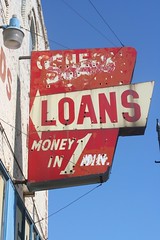
Daniel De Vise at The Washington Post reported that student loan debt is now at "$870 billion nationally, surpassing the nation’s outstanding balance on auto loans ($730 billion) and credit cards ($693 billion)." This is according to the report "Grading Student Loans," a source  that De Vise refers to as "a scholarly blog post published by the economists at the New York Fed." The cost of education has far outstripped the rise in the cost of living and the rising cost of healthcare. And yet, despite the fact that there are free solutions to the textbook part of the equation, educators are slow to adopt them. Open textbooks are free, openly licensed textbooks that are electronically available to students at no cost, and available to students in hard-copy for the cost of printing. They are also editable by the instructors.

There are major implementations of open education resources and textbooks, organizations dedicated to their creation, grants and initiatives for hosting and support, but there are still many educators out there who do not know about open textbooks. Many of the common questions about open education resources and open textbooks have been answered, but apparently not widely publicized. Some of the perceptions of OERs - that they are hard to find, of low quality, not peer-reviewed, etc. are out-dated views. Lets take a quick look at some of these questions

Where do I find them?
There are many sources of open textbooks. I really like the high quality collection of open textbooks that are being hosted by the Saylor Foundation.  One can also go to College Open Textbooks which is a good portal to other sites. There are many other sites that are hubs to open textbook sites.

What kind of quality?
Before we discuss quality, I would urge you to read my posting on "The Myth of Commercial Textbook Reliability." I don't think that open textbooks should be held the same scrutiny as commercial textbooks - it needs to be more. We can do better as an academic community than the commercial businesses are doing now. We do not have to wait through a two year publication cycle to make corrections or amendments to open textbooks. We don't have to produce or have the students buy "supplemental materials" because we can customize open textbooks for the needs of our particular students in our community.There are some very high quality open textbooks out there including the ones mentioned above from the Saylor Foundation.

But are they peer-reviewed?
There is a peer review process for open textbooks and it is evolving all the time. OpenStax is one provider of free, open source, peer reviewed text books, and there are organizations like College Open Textbooks are sponsoring peer review processes as well. And why can't we develop a process for this on our campuses?

The rising cost of education is fueling innovation in education such as open eduction resources, open textbooks, and to some extent, MOOCs (massive online open courses). As educators, we have a moral obligation to remove barriers to education and to open up the opportunities that education can provide to everyone. Now is not the time to balk at change; change is coming whether we want it to or not. Innovation does not have to be in the hands of the corporations. MOOCs were not invented by corporations but by innovative educators. We can decide if we want that change to come from forward thinking educators who can shape innovation, or we can wait for crushing debts to make the changes for us.

Note: I have more links to OER and open textbook resources on my OER page
Enhanced by Zemanta

Thursday, February 21, 2013

OER: Neuro-Cloud: a new model of textbooks

I am really excited about Neuro-Cloud. I heard about it in a tweet from Creative Commons this morning and went to take a look. This is a textbook that is being created by a community of neuroscientists who first began the project as an open journal. It is free for anyone to use because they are using the CC-by license instead of traditional copyright. It is still a work in progress: they want to have a finished textbook by July of 2013.

I have been very interested in textbooks that are created by a community of scholars rather than the traditional subject matter expert model of the traditional publishers. The math textbooks at my previous college are an example of this. I think it is particulary fitting that this is how a textbook on neuroscience is written and supported because neuroscience is a rapidly changing field. Every advance in technology gives us more ways to look at the brain and like astronomy or physics, the deeper in we look, the more we find. What is fascinating about this project is that students will be reading a text written by this current generation of neuroscientists and then will go on to do research and work that will contribute to the later editions of this book. This is a living community of scholarship as much as it is a textbook:
"The goal of the Neuro-Cloud Textbook Project is to provide a free, accurate and comprehensive introduction to neuroscience for both educators and students. This is to be accomplished through an online collaborative environment where the next generation of neuroscientists will have the opportunity to work with colleagues from all over the world. By providing students experience, connections and a chance to showcase their knowledge, all while providing a needed service to the community, the Neuro-Cloud Textbook Project creates a situation where the whole world can benefit."
There has been a lot of hand wringing about "sustainability" over open education resources and open textbooks. As soon as we move away from the education-as-a-product model and move towards education as community (I am thinking here of the Connectivist model), questions about money become less relevant.
Enhanced by Zemanta

Friday, January 25, 2013

Books and The Latest Technology

Fredrick Furnivall, OED Editor
via Wikipedia
I write here a lot about technology and books, but specifically about open education resources and open textbooks, all of which tend to mean electronic texts. I love electronic texts and the internet. Through the internet, I have free access to centuries of research, articles, and books of all kinds: books now to costly to print or own, out-of-print books, rare books, books in libraries I can't travel to. I even get a chance to see images of ancient texts never before published as lexicographers and philologists put their research online. I have never been one to bemoan the so-called death of the printed word. I like being able to access nearly any text on my phone or netbook in a completely searchable format. But be that as it may, there are still three main reasons I love and use books as physical objects.

1. Linear Arrangement
I am thinking here of the Oxford English Dictionary. The one I have at home is the two volume edition. I don't know how to classify this first reason; it is the serendipity of linear organization I think. Please help me out if there is a word for this. The linear nature of information in books is a weakness in most cases and the non-linear nature of information on the internet is a strength. Before I had access to the internet, I kept a notebook next to me while I read and I would write down words that I found that I would want to explore later or ideas, concepts, and definitions that I would research in the library. Later, I would sometimes look a word up in the online version of an encyclopedia or the Oxford Dictionary which had for a time, an online version. I always came away from that experience feeling like I had only done half the job, like there were pieces of the puzzle missing. I realized that looking up a word in that dictionary is only half the fun. The best parts were getting to the word that you were looking for and what happens after you find it. Opening up the physical book, you begin to turn the pages and as you get to the appropriate section, you begin to read in a more focused way looking for the right word, and as you find it, you begin to see words before and around it that are related. They may have the same root or prefix. Those surrounding words may provide you with a deeper understanding or even a more fitting word. And afterwords, there is looking at the etymology and quotations which can lead you to even more words. Pretty soon, the entire afternoon is gone. I have not had a similar experience online.

2. The Physical Object
Books as physical objects can be works of art in themselves. The cover design, typography, illustrations, paper and cover all contribute to books as art objects. Well designed layout and typography can make reading a book easier and more pleasurable. Granted, this is purely a subjective experience. It is also what keeps books expensive. The photograph below is one that I took of my copy of Selected Epigrams from the Greek Anthology by J.W. MacKail. It was published in 1908 in two volumes on acid free paper, cloth bound, stitched binding. The paper has a thick, creamy texture and if you look carefully at the picture, you can see the type impressing in from the previous page. I bought the set for $2 because "there is not much call for this sort of thing now-a-days." I will not have a similar experience online. 


3. Utility
There are just some tasks that are easier to do on my desk or at the coffee table than they are on a computer. There is this great book called The Three Text Hamlet: Parallel Texts of the First and Second Quartos and First Folio edited by Kliman and Bertram. The book opens up to about 28 inches and has the complete text of the three versions of Hamlet with a fourth column giving the transpositions from the first quarto. This would be a difficult thing to recreate on a computer. I guess one could have a large enough monitor, but it is a real treat to be able to sit on the floor with this book and argue for one interpretation over another based on the text that, at the moment anyway, supports your argument. Again, this is a fairly subjective experience, it is like being able to take in a whole map at a glance to take in the context of a place rather than just seeing a small portion of it just to find out where you are going. 


There are some surprises for me in all of this - I thought I would be much more attached to art books but a couple of things have happened to art books over the years. The ink and printing have gotten so expensive that the publishers are using cheaper and cheaper materials. Some art books just stink now. Also, with Google Art Project, I can virtually walk through the door of the museum, see where the painting is hanging, and then get so close that I can see each stroke, hairs left by the brush, and threads from unfinished canvas. It does not replace seeing the paintings, but I think it is superior to some of the art textbooks that I have seen out there. SmartHistory is also a great alternative: 
"Traditional textbooks are prohibitively expensive for many and do not take advantage of the digital technologies that are reshaping education. For example, textbooks often use only a single image to represent a work of art, they speak with an authoritative but impersonal voice, and they rarely incorporate the many valuable resources that universities, libraries and museums make available. We built Smarthistory to emphasize the experience of looking at art by using unscripted conversations recorded in front of the work of art whenever possible, by incorporating numerous images and video, and by curating links to high-quality resources on the web."
Google Art Project is freely available and SmartHistory is openly licensed, and free. There is no reason that these sources couldn't replace the $200 plus art history or art appreciation textbooks. This is the right tool for that job.

The current costs of books, especially textbooks, is unconscionable. Despite that, sometimes the best technology is not the latest. There is a time to break out the 3-d drawing software and a time to break out the pencil and paper. 
Enhanced by Zemanta