Showing posts with label policy. Show all posts

Monday, March 26, 2012

OER Policy Registry: Request for Help

Image representing Creative Commons as depicte...Image via CrunchBaseCable Green just lit the Bat Signal!

Greetings Open Colleagues,

The open community shares a need for more information to help us with our work. We know, for example, that there are many policies supporting open education at institutions and governments throughout the world. Many of us know of some of these policies, but it would be extremely helpful if we had a single database of open education policies that the entire community could access and update.

To meet this goal, Creative Commons has received a small grant to create an “OER Policy Registry.” The Open Educational Resources (OER) Policy Registry will be a place for policymakers and open advocates to easily share and update OER legislation, OER institutional policies and supporting OER policy resources. We have begun to enter OER policies into the registry, but we need your help to make it a truly useful global resource.

The open movement is reaching a stage where we’ve had some real, concrete OER policy victories and there is the potential to achieve many more. Sharing our collective knowledge of existing OER policies, in the same way we believe in sharing educational resources, will help advocates and policymakers worldwide be more successful.

Please join the effort:
(1) Contribute any OER policies you know about via this Google form.
  • We are collecting both legislative AND institutional (non-legislative) OER policies from around the world. Your form submissions will be added to the draft list of OER policies.
(2) Review the draft list of OER policies. (Google doc)
(3) Forward this message to your colleagues, lists, blogs, and other channels, to ensure that we get as much input as possible. As the OER movement is global, it is critical that we capture OER policies from around the world.

Anyone can add OER policies to the Google form through the next month. Beginning May 1, the OER Policy Registry will move to the Creative Commons wiki. At that point, anyone will be able to edit and update the OER Policy Registry on the wiki, and all contributions will be licensed under CC BY.

We’re starting with a Google form because (a) it’s easy and (b) wikis require you to create an account before editing, and that may be a barrier to participation.

CC is in contact with other projects that collect similar information, including UNESCO, CoL, the Florida Distance Learning Consortium, EU OCW and a project in New Zealand. We will add OER policy data they gather as it becomes available. If anyone knows of other efforts to gather OER policies, please send them to Anna Daniel (anna@creativecommons.org) and we will reach out to them too.

If you have any suggestions or feedback on the content and/or framework, please let us know.

Warmest regards and thank you!

Cable
Enhanced by Zemanta

Wednesday, November 16, 2011

Call for Open Education Practices

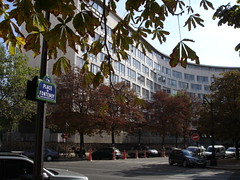
UNESCO Headquarter, ParisImage by Matthias Ripp via Flickr
This is from Abel Caine:

UNESCO is a member of the Open Educational Quality Initiative (OPAL) which aimed to create a new open educational practices (OEP) framework.

Open educational practices were defined as practices which support the production, use and reuse of open educational resources (OER) which help learners, educational professionals, organizational leaders, and policy makers to improve quality in higher education and adult education and training.

UNESCO's responsibility within the OPAL Initiative was to:
1.   Build a Clearinghouse of at least 100 of the best open educational practices; and
2.   Assist at least 50 organizations to apply an OEP Maturity self-assessment

We are close to achieving our goal and with the Initiative ending on 31st December 2012, we are making a final big Call to all members of the global OER community.

If you are currently working with OER or open educational practices, we would like to invite you to submit your practice to the OPAL Clearinghouse.

This is a very quick fill-in-form (approximately 5 minutes) which allows you to share your best practices.

If you feel your organization already practices open education or is ready to move into open educational practices, then please take the time to complete the OPAL Maturity Assessment:

This is a comprehensive mapping exercise based on the OPAL Guidelines (approximately 25 minutes).

Please excuse any cross-posting and don’t hesitate to contact both myself or Ms. Molly Malone (m.malone@unesco.org) for any help to complete the uploading of a practice or the self-assessment. We'd appreciate it if you could please also forward this message to your OER colleagues and look forward to your submissions.
Enhanced by Zemanta

Thursday, October 27, 2011

Open Ed Conf. Keynotes: Cable Green & Philipp Schmidt

Image representing Creative Commons as depicte...Image via CrunchBaseThe Obviousness of Open Policy


Speakers: Cable Green
The Internet, increasingly affordable computing, open licensing, open access journals and open educational resources provide the foundation for a world in which a quality education can be a basic human right. Yet before we break the "iron triangle" of access, cost and quality with new models, we need to educate policy makers about the obviousness of open policy: public access to publicly funded resources.

Speaker/Artist(s) Info
Director of Global Learning, Creative Commons

Notes:
"If we had a food machine that could feed everyone in the world and the marginal cost is zero, and it won't hurt farmers, should we turn it on?"

His dream - everyone in the world can get the education they desire. If there are is a need to educate 263 million students - we could never build enough traditional schools to educate those who need it.

If we are not sharing, we are not teaching. David Wiley

There is a huge community of open source organizations.

Problem: Most of the policy makers do not understand 20th cent. technology and tools (open licensing, mobile tech, the affordances of the internet). They do not understand the tools collectively - they are able to collectively create OERs.

Rivalrous vs. Non- Rivalalrous resources - NR is digital and open licenses.

Publicly funded resources should be available to the public who paid for them.

If the world spent 5% of the GDP on edu that would equal 3 billion dollars.

How do you sustain OERs? If OER is the default of our normal work, then we do not need to invest new money. The policy is simple to explain: if work is in public domain it goes to the public; if it is licensed, the license should be open.

"We should get what we pay for."
Cooperate & share = we all win
Affordability
Self Interest

If we had open policies what could we do? Billions is given out to ed institutes for research but there are few requirements to share that research with an open license.

English Comp - 55k enrollments x $100 text = 5.5 million dollars a year to the state of Washington. Does this make sense? The open text saves millions. The money comes from fed and state financial aide.
WA will pay 2 mil for an open textbook, spend 100,000 to update it every year and still come out ahead. And then they will openly license it and still offer it for free.

Brazilians have to search for open texts before investing in commercial texts.

Efficient use of public funds to increase student success and access to quality educational materials
Everything else including all existing business models are not sacred.

If we had a food machine, we have a moral obligation to turn them off.

"The opposite of open is not closed; the opposite of open is broken."

The Impossible Open Education Future

Speaker: Philipp Schmidt  (bokap.net)
Executive Director and Co-Founder, Peer 2 Peer University

He is a Shuttleworth Fellow

"The Capetown Declaration twist"

Started Peer-to-Peer University in 2008 - Vijay Kumar said "You are starting from the wrong point - imagine that there was no university - what would it look like?"

They launched the first courses in 2009.

Anyone can join, OER, light interface, badge system. Their site is a light weight connector rather than an LMS. "School of Open" is being cooked up right now.

His frustration: Asking too much and expecting too little at the same time.

  • OER cost savings are a big deal.
  • Open is not a quick fix for all challenges in broken system. 
  • Brihanna needs an affordable student loan (in most places in the world, she would not have to work so hard)
  • Disruption comes from the fringes - make open research institutes 
  • Open education is global - we are not paying attention to what is happening in dev world
  • Open needs to keep the spirit of a lab
  • Open - participation, making, tinkering, experimenting, social, serendipity
Brothers Wright: If we had studied flight we would have never done it because we would have learned that it was impossible. 

Imagine the Impossible Open Education School of the Future
 In P2PU - they tend to use cohorts rather than MOOCs
A strong social bond of cohorts
Great facilitators are hard to scale

Alternatives? A learning expedition - following the markers of others up the side of the mountain. You can hire a guide. There model is "challenges." There is a badge system and a "Request a Mentor" button. There is also a "Become a Mentor" button. 

Learning = making things with others

What makes a good challenge? These can make good portfolio pieces
Goal: enable community to contribute "challenges"
How to: What makes a good challenge?
Testing challenges in other domains

Assessment: Every time you do an assessment apart from the activity you introduce inaccuracies.
Why not use gaming as assessment - assessment needs a "Press R to Try Again."
You fail a test - when you lose a game, you try again.

1st Step - Collect Data
2nd Step -  Showcase and share portfolios
3rd Step -  Listen to the community

"Framework and Design of Social Learning"
Enhanced by Zemanta

Friday, October 08, 2010

Open Access Week

Open Access logo, converted into svg, designed...Image via WikipediOPen 
Open Access Week is happening  Oct. 18 - 22. I am particularly interested in it because it is a chance to hear leaders in the field of open education resources, such as Wayne Mackintosh, the director of the OER Foundation, facilitate free webinars. It looks like an interesting schedule.

"Open Access Week, a global event now entering its fourth year, is an opportunity for the academic and research community to continue to learn about the potential benefits of Open Access, to share what they’ve learned with colleagues, and to help inspire wider participation in helping to make Open Access a new norm in scholarship and research.

“Open Access” to information – the free, immediate, online access to the results of scholarly research, and the right to use and re-use those results as you need – has the power to transform the way research and scientific inquiry are conducted. It has direct and widespread implications for academia, medicine, science, industry, and for society as a whole.

Open Access (OA) has the potential to maximize research investments, increase the exposure and use of published research, facilitate the ability to conduct research across available literature, and enhance the overall advancement of scholarship. Research funding agencies, academic institutions, researchers and scientists, teachers, students, and members of the general public are supporting a move towards Open Access in increasing numbers every year. Open Access Week is a key opportunity for all members of the community to take action to keep this momentum moving forward."
Enhanced by Zemanta