Showing posts with label fwk. Show all posts

Monday, January 28, 2013

OER: 12 Sources of Open Textbooks

Brigham Young University faculty survey seeks ...
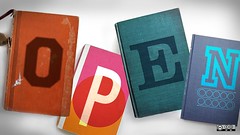
(Photo credit: opensourceway)
With the State Department's announcement and posts on twitter about failed business models, I think this is a good time to revisit how to find actual free, openly licensed textbooks. There are many ways to find free, openly licensed textbooks on the internet. I have listed a dozen here, but if you are still not finding what you need, feel free to contact me. I really mean that. I think making education financially accessible to your students is just that important. Some of these resources over lap, but that is okay - you will find some of these sites easier to use than others. There are a lot of things happening in the world of open textbooks. A lot of the criticisms that you may have heard in the past are fading away as sites dedicated to the peer review and vetting of open textbooks become more prevalent. This is not the definitive list - if there is a site that you use or prefer, please post a comment and share.

1. Saylor Foundation
Each of the books listed below is freely available for download, online reading, and sharing, under one of various open licenses.

2. OpenStax
"OpenStax College is a nonprofit organization committed to improving student access to quality learning materials. Our free textbooks are developed and peer-reviewed by educators to ensure they are readable, accurate, and meet the scope and sequence requirements of your course."

3. MERLOT
"Putting educational innovations into practice. Find peer reviewed online teaching and learning materials. Share advice and expertise about education with expert colleagues. Be recognized for your contributions to quality education."

4. College Open Textbooks
If you run into any links to Flat World Knowledge textbooks here, be sure to go to the Saylor Foundation website to get free access to those titles. "College Open Textbooks has peer-reviewed more than 100 open textbooks for use in community college courses and identified more than 550: College Open Textbooks has already peer-reviewed several new open textbooks for use in community college courses and identified more than 250 others for consideration. Open textbooks are freely available for use without restriction and can be downloaded or printed from web sites and repositories."

5. Connexions
"Connexions is a dynamic digital educational ecosystem consisting of an educational content repository and a content management system optimized for the delivery of educational content. Connexions is one of the most popular open education sites in the world. Its more than 17,000 learning objects or modules in its repository and over 1000 collections (textbooks, journal articles, etc.) are used by over 2 million people per month."

6. Textbook Revolution
"Textbook Revolution is a student-run site dedicated to increasing the use of free educational materials by teachers and professors. We want to get these materials into classrooms. On this site you'll find links and reviews of textbooks and select educational resources. Some of the books are PDF files, others are viewable online as e-books, or some are simply web sites containing course or multimedia content."

7. Community College Consortium for Open Education Resources
"The Open Educational Resources (OER) movement encourages the creation and reuse of free, high-quality content and open source learning systems to replace expensive and proprietary systems. By promoting OER, community colleges can create sustainable academic resources for students and provide collaborative professional development opportunities for faculty."

8. Boundless Textbooks
"Boundless is pleased to offer open introductory textbooks in the following subjects. These textbooks are published under the Creative Commons Attribution-ShareAlike (CC BY-SA) license, which means anyone is welcome to quote, mashup, reuse, and republish any portion of any book, anywhere, so long as proper citation is given."

9. Wikibooks
Wikibooks is an "open-content textbooks collection that anyone can edit" with over 2,500 open-content textbooks.

10. Open Culture
A meta-collection of free textbooks.

11. Bookboon
"Online Textbooks for Free Bookboon's free online textbooks for students are focused and to the point. They are all written by highly respected professors from top universities in the world and cover topics such as economics, statistics, IT, engineering and natural science."

12. Directory of Open Access Books
"The primary aim of DOAB is to increase discoverability of Open Access books. Academic publishers are invited to provide metadata of their Open Access books to DOAB. Metadata will be harvestable in order to maximize dissemination, visibility and impact. Aggregators can integrate the records in their commercial services and libraries can integrate the directory into their online catalogues, helping scholars and students to discover the books. The directory will be open to all publishers who publish academic, peer reviewed books in Open Access and should contain as many books as possible, provided that these publications are in Open Access and meet academic standards."
Enhanced by Zemanta

Tuesday, November 13, 2012

WritingCommons.Org and Community-Based OER Models

Writing
Kicking the OERs old school.
I read a great posting at Writing Commons this morning entitled "Flat World Knowledge, Textbook Affordability, and a Call for More Collaborative Efforts" that really echoes my thinking on this. Since Flat World Knowledge is no longer open (as defined by Hewlett and many other definitions of OER), it makes the community efforts around open textbooks all the more important. I have long been a proponent of community developed, vetted, and maintained OERs and open textbooks. Please note that I did not say "I am against business." I am for efforts that are truly open to make open textbooks and other OERs freely available to students. This is not some radical notion - it is a return to the original intent of textbooks which is to support student learning rather than to support "sustainable business models." If someone figures out how to do both, more power to them. In the meantime, we need to support Writing Commons, an online composition textbook.
"We at Writing Commons have been working to provide quality open-access articles about writing and research and will continue to do so. While our materials are not yet comprehensive, we are adding new peer-reviewed material every month. We encourage instructors to email us about any gaps in our coverage (suggestions may be sent to jennifer@writingcommons.org), and we can work suggestions into future calls for papers. And while we have not yet made our open textbook customizable, as had Flat World Knowledge, our site does enable instructors looking to incorporate WC articles into their lesson plans to select and assign material as needed. (See http://writingcommons.org///site-map-1 for a table of contents.) Currently, WC editors are developing an instructional video that will guide users through the site; we hope that this video will help teachers efficiently select the material most relevant to their courses."
These kinds of efforts need our support. I used to teach English and I have a lot of teaching materials and workbooks that I have written that I am planning on contributing time and materials to this community. Please pass this on to others you many know who can contribute materials or time for reviewing materials. OERs from an open community of instructors, administrators, instructional designers is going to be the truly sustainable model.  
Enhanced by Zemanta

Sunday, November 04, 2012

Premium Free Range OER

English: Free Range Poultry and Shed, near Sei...
Free Range Poultry and Shed, near Seisdon, Staffordshire (Photo credit: Wikipedia)
I don't want Flat World Knowledge to corner the market in charging students for free textbooks. I am announcing here that CainCo EduProducts will also be offering premium free textbooks at a relatively fair and competitive cost. How can we put a price on free textbooks? We are taking a page from the poultry industry. And the definition of "free" is different here. My books will be "free" as in "free range" hence the premium price. Each textbook will be:
  • Free range
  • All natural
  • Clearly labeled GMO free
  • Fat free
  • Low sodium
  • Electronic versions made from only the best AMERICAN MADE electrons
Each lovingly crafted paper version of our textbooks will be made from sustainably harvested, hormone free trees and turned into pulp through non-traumatic, humane Ayurvedic massage process. 

How will our textbooks help students save money? To afford these textbooks, students will have to become experts at saving money. The lessons they learn from that they will carry with them the rest of their lives (a lot like their student loans). 
Enhanced by Zemanta

Saturday, November 03, 2012

Flat World Knowledge Falls Flat

For use to open - free- education resources.
For use to open - free- education resources. (Photo credit: Wikipedia)
I am very disappointed in Flat World Knowledge's decision to end free access to students as reported in the Chronicle of Higher Education. I was always very suspect of this company from the beginning. I am getting sick of businesses saying that they are a part of the open source movement, OER, or for Open Text Books and then coming up with some lame excuse to go back to business as usual - lets make money on the backs of students in the name of "sustainability"! In the article they admit that they are not really committed to the open license.

We should call companies like FWK businesses then and not advocates or proponents of open education resources. The idea behind OER is that faculty would freely develop their textbooks for students to freely use. I am not against business but lets call it business and not OER. I am really not interested in the content reviewers from commercial publishers because they are not in the business of creating, vetting, and customizing for my students or my college in my community with its unique issues - they are interested in packaging their material for a mass market and getting some Phd's name on the box to make it acceptable to colleges who are not quite ready to take the plunge into OER. I almost wrote a book for FWK but I realized that my content would be at the mercy of the market. I knew that at any time they could change their business model and the students would be the ones to suffer. The business of businesses is business. The business of education should be education. There are great textbooks out there with Creative Commons licenses that students do not have to pay for. We have a moral obligation to make education accessible to as many students as possible. OERs and open textbooks are a way to do that. Freedom as in free to charge the students is not the kind of freedom that I am interested in.

And what does this mean for the Creative Commons license? If a text is really CC, shouldn't a student have access to that text under the same license as FWK?

Look at any of the articles below for an alternative model of commercial businesses managing academic content.
Enhanced by Zemanta

Wednesday, April 06, 2011

Spotlight on Innovation: Attacking High Text Costs While Improving Outcomes

Spotlight On Innovation:
Attacking High Text Costs While Improving Outcomes
Date: Monday, April 11th, 2011
Time: 3:30 pm ET / 12:30 pm PT
Duration: 50 minutes followed by a live Q&A session
As the high cost of college texts negatively impacts student retention and outcomes, what actions can faculty and institutions take to reverse this trend?

Register now for this webinar to learn about three of the most exciting initiatives aimed at driving costs down while enhancing innovation and outcomes.
Moderated by Eric Frank, President and Co-Founder of Flat World Knowledge, this panel will begin with an overview of what open texts are and how they've emerged as a force in past years, and then spotlight the innovative work of the University System of Ohio, Washington Open Course Library Project, and Virginia State University.
Join us on April 11th. Click below to register.
Featured Speakers:
THE UNIVERSITY SYSTEM OF OHIO
Darlene McCoy
Associate Vice Chancellor, Affordability and Efficiency
Dr. Steve Acker
Research Director, EText Ohio Project; Emeritus Professor, The Ohio State University
WASHINGTON STATE OPEN COURSE LIBRARY PROJECT
Dr. Cable Green
Project Director of eLearning and Open Education, WA State Board for Comm. and Tech. Colleges
VIRGINIA STATE UNIVERSITY
Dr. Mirta Martin
Dean, Reginald F. Lewis School of Business
Dr. Andrew Feldstein
Assistant Professor


Can't Make It?
Feel free to check out our pre-recorded webinar library which contains many 30-60 minute webcasts. Visit our webinar library.
Enhanced by Zemanta

