 |
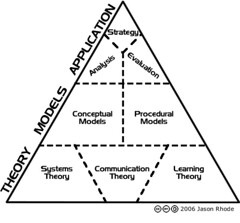
| Hierarchy of Instructional Design (Photo credit: jrhode) |
Instructional designers take on many roles at campuses. The perspectives of the designers combined with the organizational structure of the campus can greatly impact the results of the instructional design process. This presentation examines the importance of instructional design to the construction of high quality learning environments. Topics to be covered include fundamental principles in cognitive science, learning theories and backward design. Implications for the design of courses which range from technology-enhanced to technology-centric (e.g. fully online courses and MOOC’s) will be presented. Applications of instructional design in strategic planning for learning environments as well as practical considerations for implementation of strategies will be discussed. Advantages and disadvantages of a variety of organizational reporting structures will be explored. Specific ideas participants will take away from the session
• Importance of instructional designers to the development of high quality courses that use educational
technology
• Importance of organizational structure in facilitating instructional design for learning
• Overview of cognitive science that applies to the instructional design process
MOOCs, the model from Thrun,
Its about design, not technology
Design Considerations
Why would online video work?
What do we lose when we record a lecture?
How do we allow for substantive interactions?
He refers to the WASC handbook for interactions online.
What can tech allow us to do that we couldn't do otherwise?
Backward Design
Start with the end in mind - quote from Stephen Covey
Could also be from McTighe
Key elements of ID
What do you want your students to know'
How will you know that students have met the objectives
Interaction
Other considerations
A review of learning theories.
Behaviorism, Constructivism, Constructionism
He claims that drill and practice has its place. [I disagree with
this, I think you can learn the same with contextual learning.]
Social constructivism, situated cognition
Refers to a 1999 paper that applies cognitive science to designing
learning spaces. "Designing Learning: Cognitive science principles for
the innovative organization" Penuel & Roschelle.
What is the role of instructional designers?
CSUSB Online Learning Modules Template
1. Reading
2. Short lecture
3. Discussion
4. Student research
5. Assessment
Where are instructional designers housed in your organization?
Why does it matter?
Access to infrastructure
Access to decision makers
Responsiveness
Agility
Strategic or operational focus


